
- The Enemy Sowed While Men Slept: How False Seed Enters the Field When Watchfulness Dies
- Another Gospel: When Good News Stops Calling Men to Repent
- Another Spirit: Testing the Fire Before You Call It Holy
- Another Jesus: The Messiah the Flesh Can Tolerate
- Lord, Lord, But Lawlessness: How Religious Activity Can Hide a Rebellious Heart
- Strange Fire Beside the Altar: How Mixture Turns Worship Into Contamination
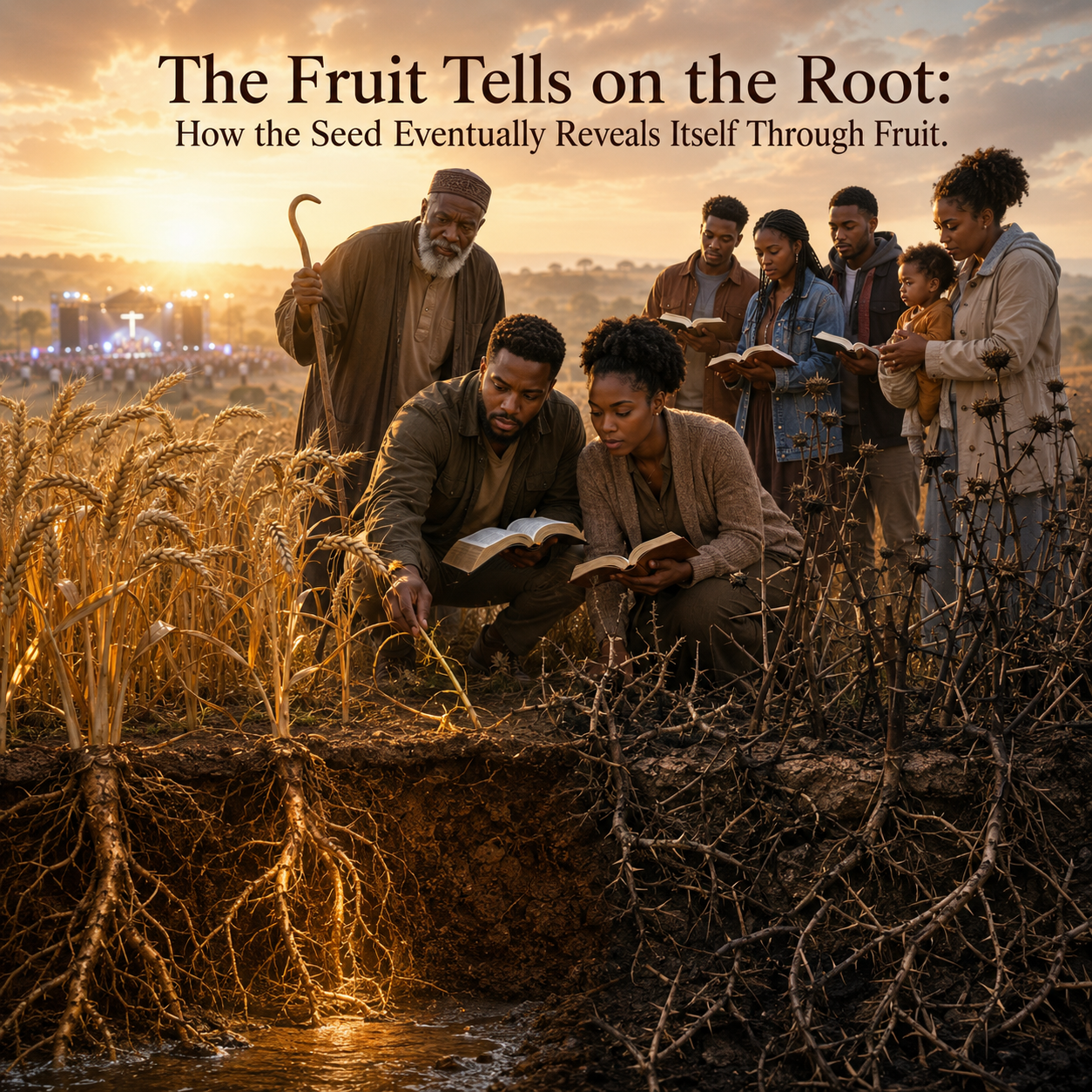
- The Fruit Tells on the Root: How the Seed Eventually Reveals Itself Through Fruit
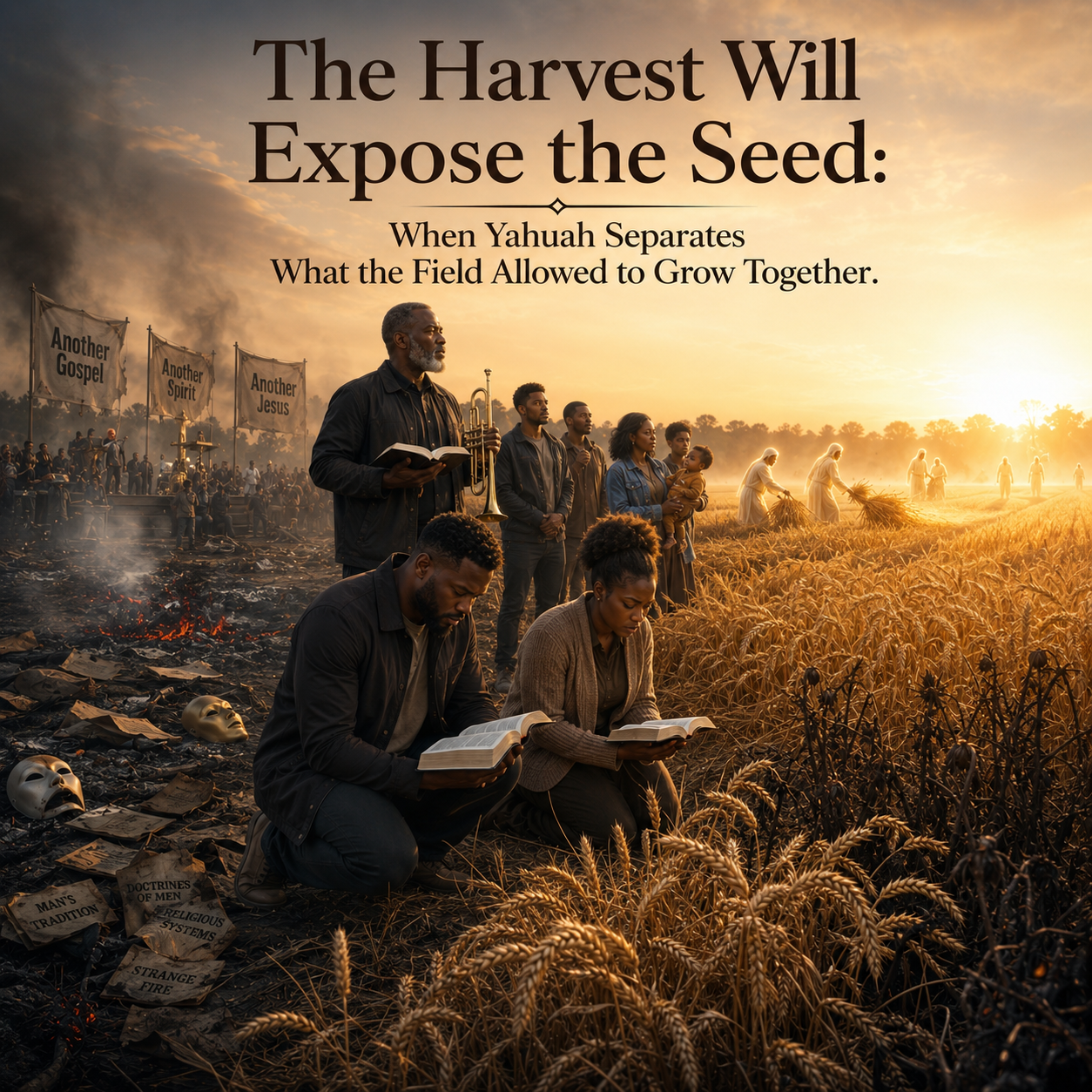
- The Harvest Will Expose the Seed: When Yahuah Separates What the Field Allowed to Grow Together
Shalom mishpacha. We are now in Part 7 of this series, and this is where Yahusha brings us to one of the clearest tests in Scripture: fruit.
Not noise.
Not titles.
Not crowds.
Not spiritual activity.
Not how gifted someone appears.
Not how many Scriptures someone can quote.
Not how many people follow them.
Fruit.
Because fruit tells on the root.
A tree can be dressed up. A field can look impressive from a distance. A tare can stand beside wheat for a season and fool the eye while everything is still immature. But given time, what is in the root will speak through the fruit.
That is why the religion of the tares can only hide for so long. It can borrow language from truth. It can carry another gospel and still call it good news. It can move by another spirit and still call the fire holy. It can preach another Jesus and still say “Lord, Lord.” It can perform religious activity while hiding lawlessness in the heart. But fruit has a way of testifying.
Fruit is the witness that the root cannot silence.
Mattithyahu (Matthew) 7:16–20 says, “Ye shall know them by their fruits. Do men gather grapes of thorns, or figs of thistles? Even so every good tree bringeth forth good fruit; but a corrupt tree bringeth forth evil fruit… Wherefore by their fruits ye shall know them.”
Beside this, we place Luqas (Luke) 6:43–45, where Yahusha says a good tree does not bring corrupt fruit, and a corrupt tree does not bring good fruit, because out of the abundance of the heart the mouth speaks.
Beside this, we place Mattithyahu (Matthew) 12:33–35, where Yahusha says to make the tree good and its fruit good, or make the tree corrupt and its fruit corrupt, because the tree is known by its fruit.
Beside this, we place Yochanan Aleph (1 John) 3:10, where Scripture says the children of Elohim and the children of the devil are manifest by righteousness and love for the brother.
So Yahusha did not leave us without a test.
He said fruit reveals.
He said the tree is known.
He said what is inside comes out.
That is sobering because many people want to judge by appearance, but Yahusha teaches us to judge by what is produced over time.
The fruit tells on the root.
The mouth may explain, but the fruit testifies.
The title may impress, but the fruit exposes.
The gift may attract, but the fruit reveals the source.
The stage may cover, but the fruit keeps preaching.
And this is why we must not be immature in discernment. Immaturity either judges too quickly by appearance or refuses to judge at all. But Yahusha teaches something better. He teaches patient discernment. He teaches fruit inspection. He teaches us not to be gullible, but also not to be reckless. He does not tell us to rip up the field in suspicion, but He also does not tell us to ignore what the fruit is showing.
The wheat and tares may grow together for a season, but they do not produce the same thing.
The tare can imitate the shape, but it cannot produce the grain.
That line is the heart of Part 7.
The tare can imitate the shape.
It can imitate religious language.
It can imitate worship.
It can imitate zeal.
It can imitate conviction.
It can imitate Hebrew vocabulary.
It can imitate authority.
It can imitate prophetic boldness.
It can imitate concern for truth.
But it cannot produce the grain of Yahuah.
It cannot produce the clean fruit of the Ruach Ha’Qodesh because it does not carry the seed of Yahuah.
Galatiyim (Galatians) 5:19–23 lays the contrast plainly. The works of the flesh are adultery, fornication, uncleanness, idolatry, witchcraft, hatred, strife, jealousy, wrath, selfish ambition, divisions, heresies, envy, murders, drunkenness, and such like. But the fruit of the Ruach is love, joy, peace, patience, gentleness, goodness, faith, meekness, and self-control.
Beside this, we place Romiyim (Romans) 8:5–9, where those after the flesh mind the things of the flesh, and those after the Ruach mind the things of the Ruach.
Beside this, we place Ya’aqob (James) 3:14–18, where bitter envy and strife are called earthly, sensual, and demonic, while wisdom from above is pure, peaceable, gentle, full of mercy and good fruits.
Beside this, we place Eph’siyim (Ephesians) 5:8–11, where believers are told to walk as children of light, because the fruit of the Ruach is in all goodness, righteousness, and truth, and to have no fellowship with the unfruitful works of darkness.
That means fruit is not vague.
Scripture names the fruit.
The Ruach produces what agrees with Yahuah’s nature.
The flesh produces what agrees with rebellion.
Another spirit produces fruit that may look religious for a moment, but over time it reveals corruption, confusion, pride, lawlessness, strife, and uncleanness.
So if a movement claims to be of Yahuah, but the fruit is pride, hatred, disorder, greed, sensuality, cruelty, confusion, manipulation, and rebellion, we have to stop calling the tree good just because it stands in the field.
If a teaching claims to be truth, but the fruit is arrogance, contempt, division, lawlessness, and a refusal to repent, we have to test the root.
If a leader claims to be sent, but the fruit is control, fear, exploitation, hidden sin, and people being drawn after the leader instead of Yahusha, we have to test the tree.
If a person claims awakening, but the fruit is bitterness, mockery, hatred, and a hard heart, we have to test the seed.
Because the fruit tells on the root.
And this applies to us first.
That is where we must stay humble. Part 7 is not permission to walk around looking for everybody else’s fruit while ignoring our own. Yahusha warned about that too.
Mattithyahu (Matthew) 7:3–5 says not to focus on the speck in your brother’s eye while a beam is in your own eye. First cast the beam out of your own eye, then you can see clearly to help your brother.
Beside this, we place Tehillim (Psalm) 139:23–24, where Dawid prays, “Search me, O El, and know my heart.”
Beside this, we place Qorintiyim Sheniy (2 Corinthians) 13:5, where believers are told to examine themselves, whether they are in the faith.
Beside this, we place Galatiyim (Galatians) 6:1, where the spiritual restore one overtaken in a fault with meekness, considering themselves.
True discernment begins with a searched heart.
If I want to inspect fruit properly, I must let Yahuah inspect me first.
If I want to help pull somebody from deception, I must not be drunk on pride.
If I want to correct mixture, I must not be mixing truth with arrogance.
If I want to expose lawlessness, I must not be hiding lawlessness in my own house.
If I want to warn about tares, I must make sure I am not watering tare-seed in my own heart.
That is how discernment stays clean.
Because the enemy loves to corrupt even correction. He loves when truth becomes a weapon for pride. He loves when people expose error with an unclean spirit. He loves when those who claim awakening become stiff, bitter, harsh, and unteachable. He loves when people can identify a false gospel out there but cannot see the false fruit growing in here.
So the Word has to search us first.
The wheat bows before it points.
The wheat trembles before it speaks.
The wheat receives pruning before it critiques the field.
Yochanan (John) 15:1–2 says Yahusha is the true vine, the Father is the husbandman, and every branch in Him that bears fruit, the Father prunes, that it may bring forth more fruit.
Beside this, we place Yochanan (John) 15:4–5, where Yahusha says to abide in Him, because apart from Him we can do nothing.
Beside this, we place Yochanan (John) 15:8, where the Father is glorified when disciples bear much fruit.
Beside this, we place Ibrim (Hebrews) 12:10–11, where Yahuah’s discipline produces the peaceable fruit of righteousness in those trained by it.
That teaches us something powerful: even real branches need pruning.
Being wheat does not mean there is nothing to correct. Being a disciple does not mean the Father leaves every attitude, habit, appetite, and hidden root untouched. Fruitfulness requires pruning. And pruning does not feel good to the flesh.
Pruning cuts what drains life.
Pruning removes what blocks growth.
Pruning exposes what looked like part of the plant but was not helping the harvest.
Pruning is not punishment for the fruitful. It is the Father’s care over what belongs to Him.
So when Yahuah corrects us, we should not always interpret that as rejection. Sometimes correction is proof that He is tending the branch. Sometimes conviction is the pruning knife of mercy. Sometimes exposure is Yahuah saying, “This cannot remain if you are going to bear more fruit.”
That is why wheat receives correction differently than tares.
The wheat may weep, but it bows.
The tare resists and accuses.
The wheat says, “Search me.”
The tare says, “Do not judge me.”
The wheat says, “Cut what is killing me.”
The tare says, “Accept me as I am.”
The wheat wants fruit.
The tare wants appearance.
This is why Yahuah looks at the heart and then proves the heart by what grows from it.
Yirmeyahu (Jeremiah) 17:9–10 says the heart is deceitful above all things, and Yahuah searches the heart and tests the reins, to give every man according to his ways and according to the fruit of his doings.
Beside this, we place Mishlei (Proverbs) 4:23, which says to guard the heart with all diligence, because out of it are the issues of life.
Beside this, we place Mattithyahu (Matthew) 15:18–20, where Yahusha says what comes out of the mouth proceeds from the heart and defiles the man.
Beside this, we place Mishlei (Proverbs) 20:11, where even a child is known by his doings, whether his work is pure and right.
The heart is the soil.
The doings are the fruit.
That is why the mouth eventually reveals what the heart has been growing.
A person can hide for a while, but pressure squeezes the fruit. Time reveals what seed has been watered. Offense reveals what root is alive. Correction reveals whether humility is real. Delay reveals whether faith is stable. Conflict reveals whether love is clean. Temptation reveals whether obedience has gone deeper than speech.
Fruit is not proven only when the sun is shining.
Fruit is proven under testing.
When you are corrected, what comes out?
When you are misunderstood, what comes out?
When you are not celebrated, what comes out?
When Yahuah says “wait,” what comes out?
When the Word confronts your tradition, what comes out?
When someone you do not like speaks truth, what comes out?
When the crowd goes another way, what comes out?
When your flesh wants what Yahuah forbids, what comes out?
That fruit is preaching.
Not to shame you, but to show you what root needs attention.
Ya’aqob (James) 1:2–4 says the testing of faith produces patience, and patience must have her perfect work, that we may be mature and complete.
Beside this, we place Kepha Aleph (1 Peter) 1:6–7, where the trial of faith is more precious than gold and is tested by fire.
Beside this, we place Romiyim (Romans) 5:3–5, where tribulation works patience, experience, and hope.
Beside this, we place Debarim (Deuteronomy) 8:2, where Yahuah led His people in the wilderness to humble them, test them, and know what was in their heart.
The wilderness does not create everything in the heart. Sometimes it reveals what was already there.
The delay reveals.
The pressure reveals.
The correction reveals.
The harvest reveals.
That is why the people in the wilderness are such a strong warning. They saw mighty works. They experienced deliverance. They ate manna. They drank water from the rock. They followed the cloud. But many still carried Egypt in their hearts.
Qorintiyim Aleph (1 Corinthians) 10:1–12 reminds us that our fathers were under the cloud, passed through the sea, ate spiritual food, and drank spiritual drink, yet with many Yahuah was not pleased, and these things became examples for us.
Beside this, we place Ibrim (Hebrews) 3:7–12, where the warning comes: harden not your hearts as in the provocation.
Beside this, we place Tehillim (Psalm) 95:8–11, where Yahuah says they erred in their hearts and did not know His ways.
Beside this, we place Bemidbar (Numbers) 14:22–24, where those who saw His glory and signs still tempted Him and did not listen to His voice, while Kaleb had another spirit and followed fully.
That means experiences alone do not prove fruit.
Seeing signs is not enough.
Being in the assembly is not enough.
Leaving Egypt physically is not enough if Egypt still lives in the appetite.
The fruit tells whether deliverance has reached the heart.
And this is where the religion of the tares gets exposed. Tare religion loves spiritual identity without transformed appetite. It loves testimony without obedience. It loves “we came out” language while still craving the old table. It loves the cloud when the cloud feels exciting, but complains when the cloud leads into testing.
But wheat follows Yahuah through the wilderness, not just out of Egypt.
Wheat learns obedience in hidden places.
Wheat lets the Word change appetite.
Wheat does not just leave Babylon physically or mentally; wheat stops defending Babylon’s cup.
That is why fruit and seed cannot be separated.
Galatiyim (Galatians) 6:7–8 says, “Be not deceived; Elohim is not mocked: for whatsoever a man soweth, that shall he also reap. For he that soweth to his flesh shall of the flesh reap corruption; but he that soweth to the Ruach shall of the Ruach reap life everlasting.”
Beside this, we place Hoshea (Hosea) 10:12, where Yahuah says to sow to yourselves in righteousness and reap in mercy, breaking up the fallow ground.
Beside this, we place Mishlei (Proverbs) 11:18, where the one sowing righteousness has a sure reward.
Beside this, we place Ya’aqob (James) 3:18, where the fruit of righteousness is sown in peace by those who make peace.
Seed becomes harvest.
If we sow pride, pride will grow.
If we sow bitterness, bitterness will grow.
If we sow lust, lust will grow.
If we sow excuses, excuses will grow.
If we sow lawlessness, corruption will grow.
If we sow prayer, Word, repentance, obedience, mercy, and truth, fruit will grow.
Yahuah is not mocked.
We cannot sow to the flesh all week and expect to reap the fruit of the Ruach because we said the right words on the Sabbath or in a study. We cannot water rebellion and expect righteousness to bloom. We cannot plant bitterness and expect peace to grow. We cannot feed the old man and wonder why the new walk feels weak.
What we water grows.
That line needs to sit in the heart.
What we water grows.
If you water offense, do not be surprised when bitterness has branches.
If you water lust, do not be surprised when uncleanness bears fruit.
If you water pride, do not be surprised when correction becomes unbearable.
If you water fear, do not be surprised when obedience feels impossible.
If you water truth, repentance, prayer, discipline, and obedience, do not be surprised when fruit begins to appear.
The seed may be small, but harvest is patient.
And this is also why we have to guard against roots, not only fruit. By the time the fruit appears, the root has already been drinking.
Ibrim (Hebrews) 12:15 warns us to look diligently lest any man fail of the grace of Elohim, lest any root of bitterness springing up trouble us, and thereby many be defiled.
Beside this, we place Debarim (Deuteronomy) 29:18, which warns against a root bearing gall and wormwood.
Beside this, we place Mishlei (Proverbs) 12:3, where the root of the righteous shall not be moved.
Beside this, we place Romiyim (Romans) 11:16, where if the root is holy, so are the branches.
Bitterness begins as a root before it becomes fruit.
Pride begins as a root before it becomes speech.
Rebellion begins as a root before it becomes a lifestyle.
False worship begins as a root before it becomes a system.
That is why Yahuah deals with hidden things. He is not merely trimming bad behavior from the outside. He is after the root.
If the root stays bitter, the fruit will return.
If the root stays proud, the apology will not last.
If the root stays lawless, the religious activity will become a cover.
If the root stays contaminated, the worship will become mixture again.
So we need more than surface change. We need a new heart.
Yechezqel (Ezekiel) 36:26–27 says Yahuah will give a new heart, put a new spirit within His people, take away the stony heart, give a heart of flesh, put His Ruach within them, and cause them to walk in His statutes.
Beside this, we place Yirmeyahu (Jeremiah) 31:33, where Yahuah says He will put His Torah in the inward parts and write it in the heart.
Beside this, we place Tehillim (Psalm) 51:10, where Dawid cries, “Create in me a clean heart, O Elohim.”
Beside this, we place Romiyim (Romans) 12:2, where we are told to be transformed by the renewing of the mind.
That is the mercy of Yahuah. He does not only command fruit; He changes the root. He writes His Word inside. He gives His Ruach. He softens the heart. He renews the mind. He makes obedience possible from within.
This is why true fruit is not self-righteous performance.
True fruit is the evidence of Yahuah’s work in a submitted life.
The flesh can perform morality for applause.
The flesh can perform religion for identity.
The flesh can perform discipline for pride.
The flesh can even perform humility for approval.
But the fruit of the Ruach has a different scent. It is clean. It is humble. It is steady. It gives glory to Yahuah. It does not need to be seen by men to remain faithful.
Mattithyahu (Matthew) 6:1–4 warns against doing righteous acts to be seen by men.
Beside this, we place Mattithyahu (Matthew) 23:25–28, where Yahusha rebukes religious leaders who clean the outside while inside they are full of extortion, excess, hypocrisy, and lawlessness.
Beside this, we place Shemu’el Aleph (1 Samuel) 16:7, where Yahuah says man looks on the outward appearance, but Yahuah looks on the heart.
Beside this, we place Qorintiyim Sheniy (2 Corinthians) 10:18, where the approved one is not the one who commends himself, but the one whom Yahuah commends.
Fruit is not a costume.
Fruit is not branding.
Fruit is not public image.
Fruit is not the carefully arranged basket people see on the table.
Fruit is what grows from the life when Yahuah searches the tree.
That is why the hidden life matters.
What fruit grows in the home?
What fruit grows when nobody is recording?
What fruit grows when you are not teaching?
What fruit grows in how you speak to your spouse?
What fruit grows in how you treat your children?
What fruit grows in how you handle correction?
What fruit grows in how you respond to people who cannot benefit you?
What fruit grows in how you carry truth when you are angry?
What fruit grows in your private thoughts?
That fruit matters to Yahuah.
Because the harvest will not be fooled by public display.
The harvest exposes seed.
Mattithyahu (Matthew) 13:37–43 says the good seed are the children of the Kingdom, the tares are the children of the wicked one, the harvest is the end of the age, and the reapers are the messengers.
Beside this, we place Qoheleth (Ecclesiastes) 12:14, where Elohim brings every work into judgment, including every secret thing.
Beside this, we place Qorintiyim Aleph (1 Corinthians) 4:5, where Yahuah brings to light hidden things of darkness and reveals the counsels of hearts.
Beside this, we place Chazon (Revelation) 22:12, where Yahusha says His reward is with Him, to give every man according to his work.
The harvest does not need our marketing.
The harvest does not need our explanations.
The harvest does not need our self-defense.
The harvest sees the seed.
And that is why Mal’akhi speaks so clearly.
Mal’akhi (Malachi) 3:18 says, “Then shall ye return, and discern between the righteous and the wicked, between him that serveth Elohim and him that serveth him not.”
Beside this, we place Tehillim (Psalm) 1:1–6, where the righteous are like a tree planted by rivers of water bringing fruit in season, while the wicked are like chaff.
Beside this, we place Yirmeyahu (Jeremiah) 17:7–8, where the one who trusts in Yahuah is like a tree planted by waters, not fearing heat, whose leaf stays green and does not cease from yielding fruit.
Beside this, we place Dani’el (Daniel) 12:2–3, where some awake to everlasting life and some to shame and contempt.
There is a difference.
Yahuah makes a difference.
The harvest makes a difference.
And the fruit reveals the difference.
This does not mean the wheat never struggles. Wheat can be bruised. Wheat can be bent by wind. Wheat can need rain. Wheat can need pruning. Wheat can need restoration. But wheat carries the seed of the Kingdom, and that seed responds to Yahuah.
The righteous may fall, but they do not make rebellion their home.
Mishlei (Proverbs) 24:16 says a just man falls seven times and rises again, but the wicked fall into mischief.
Beside this, we place Yochanan Aleph (1 John) 1:7–9, where those who walk in the light confess sin and are cleansed by the blood of Yahusha.
Beside this, we place Tehillim (Psalm) 37:23–24, where the steps of a good man are ordered by Yahuah, and though he falls, he shall not be utterly cast down.
Beside this, we place Mikhah (Micah) 7:8–9, where the fallen one says, “When I fall, I shall arise,” and waits for Yahuah to plead the cause.
So we are not teaching perfectionism.
We are teaching fruit.
There is a difference between stumbling and settling.
There is a difference between being corrected and being lawless.
There is a difference between weakness that repents and rebellion that defends itself.
There is a difference between a branch being pruned and a corrupt tree refusing the husbandman.
The wheat does not claim to be sinless.
The wheat repents.
The tare performs righteousness while resisting repentance.
That is why fruit worthy of repentance matters.
Mattithyahu (Matthew) 3:8 says, “Bring forth therefore fruits meet for repentance.”
Beside this, we place Ma’aseh (Acts) 26:20, where Sha’ul preached that people should repent, turn to Elohim, and do works worthy of repentance.
Beside this, we place Luqas (Luke) 19:8–9, where Zakkai’s repentance produced visible fruit in restitution and generosity.
Beside this, we place Mishlei (Proverbs) 28:13, where the one who confesses and forsakes sin receives mercy.
Repentance has fruit.
Not just tears.
Not just words.
Not just a post.
Not just a moment.
Fruit.
If I repent from lying, truth should begin to grow.
If I repent from pride, humility should begin to grow.
If I repent from bitterness, forgiveness and mercy should begin to grow.
If I repent from lawlessness, obedience should begin to grow.
If I repent from mixture, separation unto Yahuah should begin to grow.
If I repent from false worship, spirit and truth should begin to grow.
Fruit does not mean everything matures overnight. Fruit has seasons. Growth takes time. But the direction changes. The appetite changes. The posture changes. The person starts walking differently because the seed is different.
That is why we must not confuse emotional confession with repentance if no fruit ever follows.
The religion of the tares can apologize without turning.
It can cry without changing.
It can confess without forsaking.
It can say “I’m working on it” while watering the same root.
It can say “Yahuah knows my heart” while refusing to let Yahuah change the heart.
But true repentance brings fruit.
And true fruit remains.
Yochanan (John) 15:16 says Yahusha appointed His disciples to go and bring forth fruit, and that their fruit should remain.
Beside this, we place Qolasim (Colossians) 1:10, where believers are to walk worthy of Yahuah, being fruitful in every good work and increasing in the knowledge of Elohim.
Beside this, we place Philipiyim (Philippians) 1:11, where believers are filled with the fruits of righteousness by Yahusha Messiah.
Beside this, we place Ibrim (Hebrews) 13:15–16, where praise, doing good, and sharing are sacrifices pleasing to Elohim.
Fruit remains because it is rooted in abiding, not performance.
Performance needs a crowd.
Fruit grows from life.
Performance needs applause.
Fruit grows in hidden soil.
Performance can stop when nobody is watching.
Fruit remains because the root is alive.
So ask yourself: what remains when the crowd is gone?
What remains after the emotional moment passes?
What remains when nobody praises you?
What remains when obedience costs you?
What remains when correction comes?
What remains when the narrow path gets lonely?
That is where fruit is proven.
This is also why love is such a major test.
Yochanan Aleph (1 John) 3:14 says we know we have passed from death to life because we love the brethren.
Beside this, we place Yochanan (John) 13:34–35, where Yahusha says His disciples will be known by love for one another.
Beside this, we place Qorintiyim Aleph (1 Corinthians) 13:1–3, where gifts, knowledge, faith, generosity, and sacrifice profit nothing without love.
Beside this, we place Qorintiyim Aleph (1 Corinthians) 13:6, where love does not rejoice in iniquity but rejoices in truth.
Love is fruit.
But we must define love by Scripture, not sentiment.
Love is not lying to keep peace.
Love is not blessing sin.
Love is not refusing correction.
Love is not soft speech that leaves people in bondage.
Love rejoices in truth.
Love obeys Yahuah.
Love warns when danger is real.
Love restores with meekness.
Love refuses to rejoice in iniquity.
So when someone claims truth but has no love, fruit is missing.
And when someone claims love but rejects truth, fruit is corrupted.
The fruit of Yahuah carries both.
Truth without love becomes a blade in the hand of pride.
Love without truth becomes a blanket over rebellion.
The Ruach produces truth and love together.
That is clean fruit.
And in this awakening, we need that balance badly. Because some people came out of inherited lies, but then they began producing fruit that looked nothing like Yahusha. They found some truth, but the fruit became harshness, mockery, arrogance, and contempt. They learned names and precepts, but the heart became stiff. They rejected one false system, but built a new identity around being superior to others.
Mishpacha, that is not clean fruit.
Knowing truth should make us humble, not hateful.
Being awakened should make us grateful, not arrogant.
Having Scripture opened should make us tremble, not perform.
If Yahuah had mercy and removed blinders from our eyes, then we have no room to boast over those still stumbling in darkness. We warn, yes. We teach, yes. We contend, yes. But we do it as people who were shown mercy.
Qorintiyim Aleph (1 Corinthians) 4:7 asks, “What hast thou that thou didst not receive?”
Beside this, we place Eph’siyim (Ephesians) 2:8–9, where salvation is by grace through faith, not of ourselves, lest any man should boast.
Beside this, we place Romiyim (Romans) 11:20, where believers are warned not to be high-minded, but fear.
Beside this, we place Titus 3:2–5, where we are told to show meekness, remembering that we ourselves were once foolish and disobedient, but were saved by mercy.
That is fruit.
The fruit of mercy remembers mercy.
The fruit of truth trembles at truth.
The fruit of awakening does not become drunk on itself.
The fruit of the Ruach does not use Scripture as a stone to satisfy pride.
It speaks truth, but it stays bowed.
It warns, but it weeps.
It corrects, but it remembers.
It discerns, but it does not become cruel.
That is wheat fruit.
And this is how we can begin to discern the religion of the tares. The tares often produce a fruit that may look strong but smells like flesh.
They produce pride and call it boldness.
They produce accusation and call it discernment.
They produce confusion and call it revelation.
They produce lawlessness and call it grace.
They produce rebellion and call it freedom.
They produce hatred and call it truth.
They produce performance and call it worship.
They produce self-exaltation and call it ministry.
But Yahusha said the tree is known by its fruit.
So we do not need to be bewitched by appearance.
We do not need to be intimidated by titles.
We do not need to be impressed by noise.
We do not need to be seduced by charisma.
We look for fruit.
Does it produce repentance?
Does it produce obedience?
Does it produce humility?
Does it produce love for truth?
Does it produce mercy?
Does it produce clean worship?
Does it produce endurance?
Does it produce the fear of Yahuah?
Does it produce people who follow Yahusha, or people who worship a platform?
Does it produce sons and daughters who do the will of the Father?
That is the test.
And for our own hearts, the question becomes even more personal.
What am I producing?
What do people taste when they come near my tree?
Do they taste patience, or do they taste wrath?
Do they taste mercy, or do they taste contempt?
Do they taste truth, or do they taste confusion?
Do they taste humility, or do they taste pride?
Do they taste peace, or do they taste strife?
Do they taste Yahusha’s way, or do they taste my flesh?
Because if the fruit is bitter, we cannot keep blaming the weather. At some point we have to let Yahuah deal with the root.
Luqas (Luke) 13:6–9 gives a parable of a fig tree planted in a vineyard. The owner comes seeking fruit and finds none. He says to cut it down, but the dresser asks for more time to dig around it and dung it, and if it bears fruit, well; if not, then after that it will be cut down.
Beside this, we place Mattithyahu (Matthew) 21:18–19, where Yahusha finds a fig tree with leaves but no fruit.
Beside this, we place Yesha’yahu (Isaiah) 5:1–7, where Yahuah’s vineyard brought forth wild grapes instead of good grapes.
Beside this, we place Yochanan (John) 15:6, where branches that do not abide are cast forth and burned.
Leaves are not fruit.
Religious appearance is not fruit.
Public activity is not fruit.
Having the form is not fruit.
The fig tree had leaves, but Yahusha was looking for fruit.
That is another warning to the religion of the tares. It knows how to grow leaves. It knows how to look alive. It knows how to display something green from a distance. But when Yahusha comes near, He is not looking for image. He is looking for fruit.
That should make us pray differently.
Abba, do not let me be leafy and fruitless.
Do not let me look alive while producing nothing clean.
Do not let me be busy but barren.
Do not let me be visible but empty.
Do not let me be religious but rootless.
Do not let me be admired by men and rejected by You.
That is a prayer the wheat can pray.
And the good news is that Yahuah is patient. The parable of the fig tree shows mercy before judgment. The dresser asks for time to dig and nourish the tree. That means Yahuah may deal with the soil before He removes the tree.
He digs.
He exposes.
He disturbs what was settled.
He adds what is needed.
He gives time.
But the purpose of time is fruit.
Not endless delay.
Not endless excuses.
Not endless leaves.
Fruit.
So if Yahuah is digging around your roots right now, do not curse the digging. If He is disturbing your comfort, do not call it the enemy too quickly. If He is exposing hidden things, do not run back into the dark. If He is pruning, do not resist the blade. He is after fruit.
Because the Father is glorified when His children bear much fruit.
Yochanan (John) 15:8 says, “Herein is my Father glorified, that ye bear much fruit; so shall ye be my disciples.”
Beside this, we place Mattithyahu (Matthew) 5:16, where Yahusha says to let your light shine before men, that they may see your good works and glorify your Father in heaven.
Beside this, we place Kepha Aleph (1 Peter) 2:12, where honorable conduct causes others to glorify Elohim in the day of visitation.
Beside this, we place Titus 2:7–8, where believers are to show a pattern of good works so opponents may be ashamed, having no evil thing to say.
Fruit gives glory to the Father.
Not fleshly performance.
Not self-made righteousness.
Not outward religion.
Fruit.
A changed life becomes a witness.
A clean home becomes a witness.
A humble mouth becomes a witness.
A repentant heart becomes a witness.
A disciple who follows Yahusha when nobody is clapping becomes a witness.
And that witness matters in a field full of tares.
Because people need to see the difference.
Mal’akhi (Malachi) 3:18 says there will be discernment between one who serves Elohim and one who does not.
Beside this, we place Mattithyahu (Matthew) 5:13–16, where Yahusha calls His people salt and light.
Beside this, we place Philipiyim (Philippians) 2:15, where believers shine as lights in the midst of a crooked and perverse generation.
Beside this, we place Kepha Aleph (1 Peter) 1:15–16, where we are called to be set apart because Yahuah is set apart.
The wheat must not try to look like the tares in order to be accepted by the field.
The wheat must be wheat.
Set apart.
Humble.
Fruitful.
Rooted.
Bent under the weight of grain.
The mature wheat bows because it carries fruit.
The tare stands stiff because it is empty.
That picture preaches.
Pride stands stiff.
Fruit bows.
The more Yahuah matures us, the less room there is for arrogance.
The more truth we carry, the lower we should bow.
The more fruit grows, the more careful we become with the field.
The more mercy we have received, the more mercy should season our correction.
That is what the fruit tells.
And now we bring this Part 7 charge home.
Stop judging only by shape.
Stop judging only by sound.
Stop judging only by religious vocabulary.
Stop judging only by gifts.
Stop judging only by public works.
Stop judging only by emotional moments.
Look at the fruit.
And do not only inspect the fruit in others. Bring your own basket before Yahuah.
Ask Him what is growing.
Ask Him what root is feeding it.
Ask Him what needs pruning.
Ask Him what needs uprooting.
Ask Him where you have leaves but no fruit.
Ask Him where you have been performing rather than abiding.
Ask Him where you have been sowing to the flesh and expecting the harvest of the Ruach.
Ask Him to change the root.
Because the harvest is coming.
And when the harvest comes, the field will not be judged by appearance. The seed will be exposed by what it produced.
The tare can imitate the shape, but it cannot produce the grain.
The fruit tells on the root.
The harvest exposes the seed.
So let us become a people who bear fruit worthy of repentance.
Let us become a people whose love rejoices in truth.
Let us become a people whose obedience comes from the heart.
Let us become a people whose homes produce peace and order.
Let us become a people whose correction is seasoned with humility.
Let us become a people whose worship is clean.
Let us become a people whose awakening produces mercy, not arrogance.
Let us become a people whose lives testify that Yahuah’s seed is in us.
Because in the end, the question will not be how much we looked like wheat from a distance.
The question will be what grew from the root.
Let us close with prayer.
Abba Yahuah, search our fruit and search our root. Do not let us hide behind leaves, titles, activity, knowledge, or religious appearance. Show us what is really growing in our hearts, our homes, our speech, our worship, and our walk.
Where there is bitter fruit, expose the root. Where there is pride, humble us. Where there is lawlessness, bring us to repentance. Where there is mixture, cleanse us. Where there is hatred disguised as truth, correct us. Where there is fear disguised as wisdom, deliver us. Where there is performance without abiding, call us back to Yahusha.
Make us fruitful branches. Prune what drains life. Uproot what the enemy planted. Write Your Torah on our hearts. Put Your Ruach within us and cause us to walk in Your statutes. Let the fruit of the Ruach grow in us: love, joy, peace, patience, gentleness, goodness, faith, meekness, and self-control.
Teach us to discern fruit without pride. Teach us to restore with meekness. Teach us to speak truth in love. Teach us to remember the mercy we received. Let our awakening produce humility, obedience, clean worship, and love for the brethren.
We do not want to be tares with the shape of wheat. We want to be wheat that produces grain. We want fruit that remains. We want lives that glorify You.
In the name of Yahusha Ha’Mashiach, make the root clean, make the fruit clean, and prepare Your people for the harvest. Amein.


Leave a Reply