
- The Enemy Sowed While Men Slept: How False Seed Enters the Field When Watchfulness Dies
- Another Gospel: When Good News Stops Calling Men to Repent
- Another Spirit: Testing the Fire Before You Call It Holy
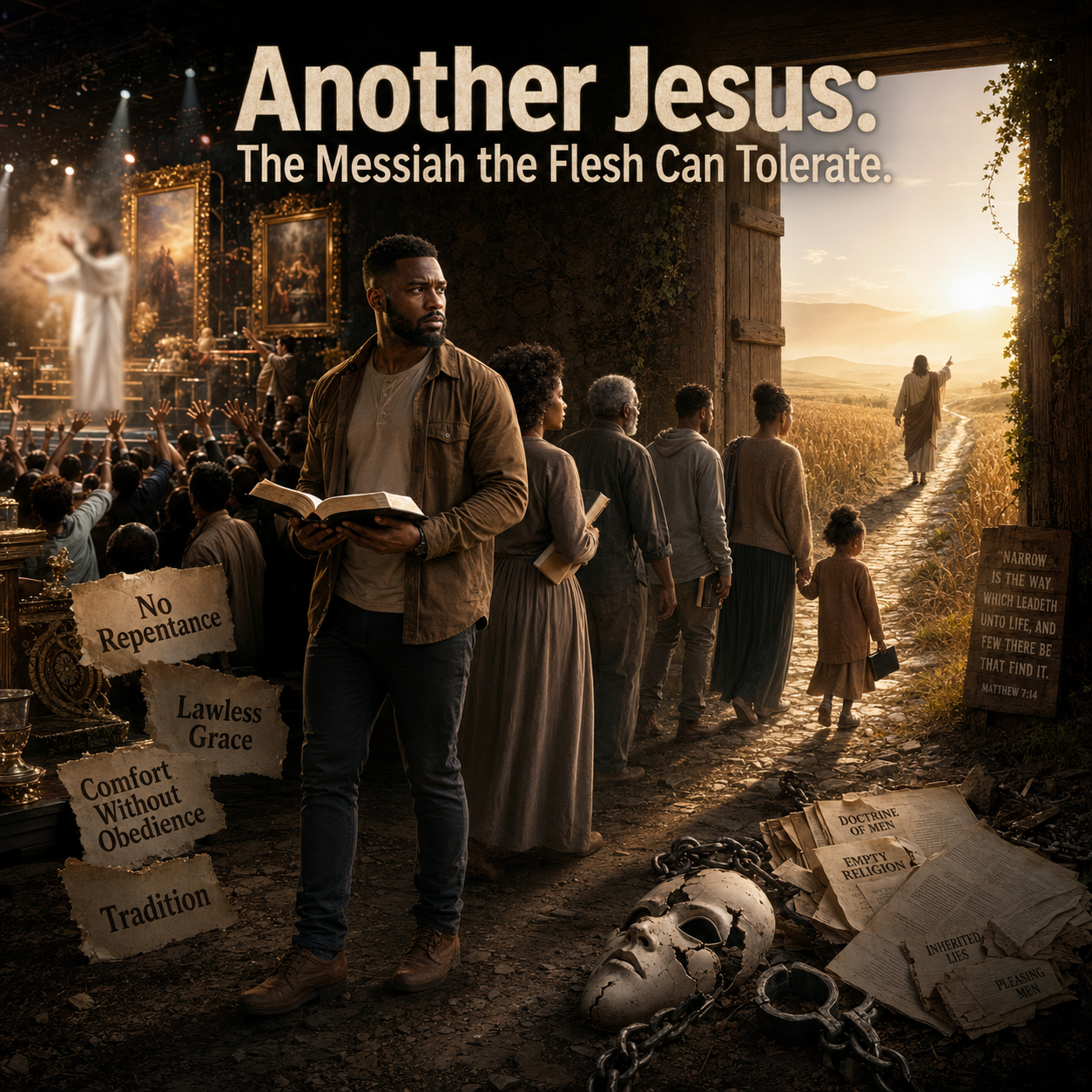
- Another Jesus: The Messiah the Flesh Can Tolerate
- Lord, Lord, But Lawlessness: How Religious Activity Can Hide a Rebellious Heart
- Strange Fire Beside the Altar: How Mixture Turns Worship Into Contamination
- The Fruit Tells on the Root: How the Seed Eventually Reveals Itself Through Fruit
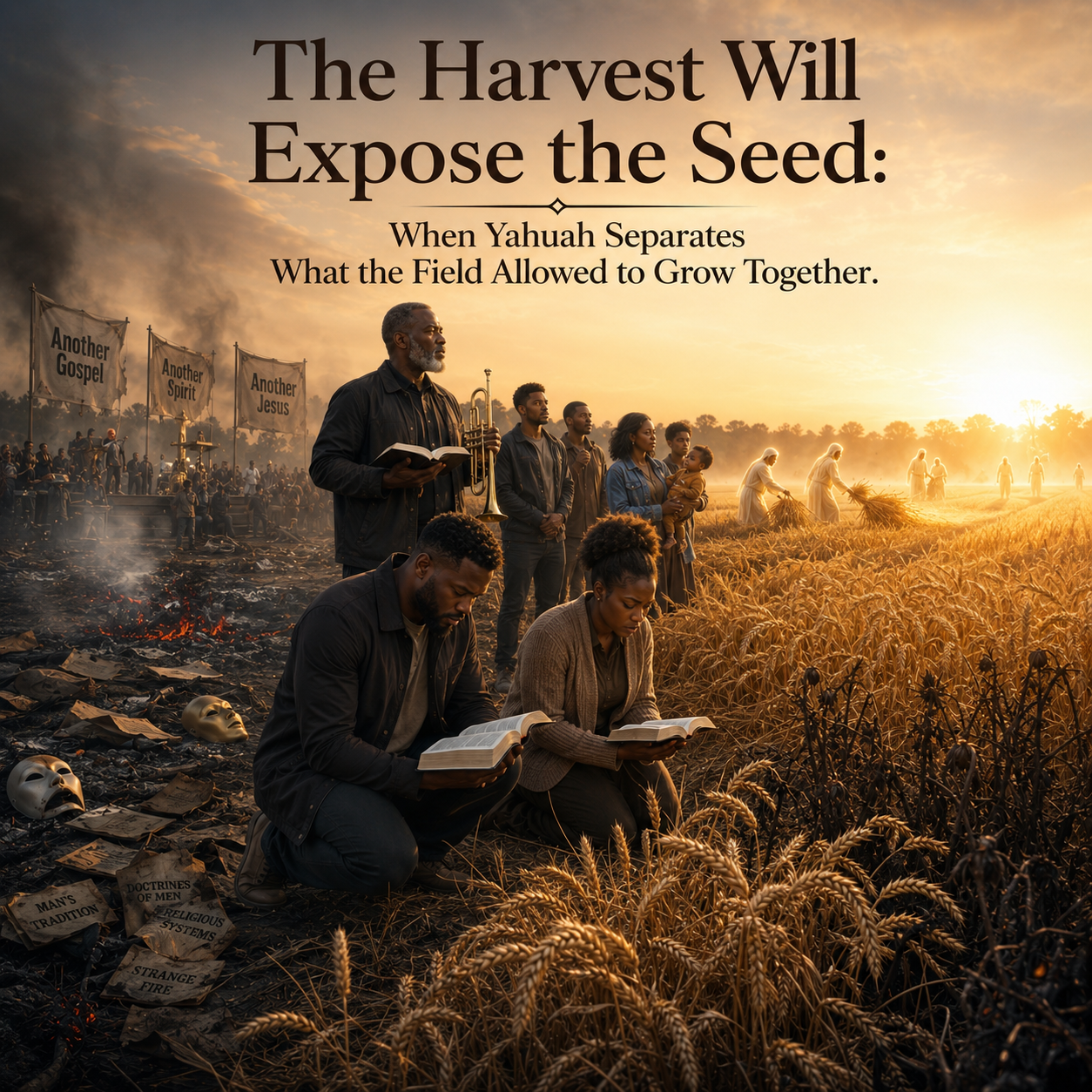
- The Harvest Will Expose the Seed: When Yahuah Separates What the Field Allowed to Grow Together
Shalom mishpacha. We are now in Part 4 of this series, and this is where the warning gets even sharper. In Part 1, Yahusha showed us that the enemy sowed tares while men slept. In Part 2, we dealt with another gospel, a message that stops calling men to repent. In Part 3, we dealt with another spirit, the counterfeit fire that people call holy before testing it by the Word.
Now we have to deal with another Jesus.
And this is heavy, because many people assume that as long as someone says “Jesus,” they must be talking about the same Messiah. They assume that as long as the Bible is open, the songs are emotional, the sermon sounds spiritual, and people say “Lord,” the identity is safe.
But Sha’ul warned differently.
Qorintiyim Sheniy (2 Corinthians) 11:4 says if someone comes preaching another Jesus, whom the emissaries did not preach, or if people receive another spirit or another gospel, they might bear with it.
Beside this, we place Galatiyim (Galatians) 1:6–9, where Sha’ul warns against a perverted gospel.
Beside this, we place Mattithyahu (Matthew) 24:24, where Yahusha warns that false messiahs and false prophets would arise.
Beside this, we place Yochanan Aleph (1 John) 4:1, where we are commanded to test the spirits because many false prophets have gone out into the world.
So the warning is clear: the counterfeit can use familiar language.
Another Jesus does not always arrive as a totally different religion. Sometimes another Jesus is preached right beside Scripture. Sometimes another Jesus is shaped by tradition, culture, empire, imagination, flesh, and convenience. Sometimes another Jesus is a religious figure who has the title of Savior but none of the authority of the King. Sometimes another Jesus is a version of Messiah who gives comfort but never correction, forgiveness but never repentance, blessing but never obedience, identity but never surrender.
That is not Yahusha of Scripture.
That is the Messiah the flesh can tolerate.
And the flesh will always design a “Jesus” that does not kill it.
Let that sit.
The flesh does not mind religion as long as the religion does not crucify the flesh. The flesh does not mind songs as long as the songs do not lead to surrender. The flesh does not mind Bible language as long as the Word is not allowed to judge the thoughts and intents of the heart. The flesh does not mind saying “Lord” as long as nobody asks why it refuses to do what the Master says.
That is why Yahusha asked the question Himself.
Luqas (Luke) 6:46 says, “And why call ye me, Master, Master, and do not the things which I say?”
Beside this, we place Mattithyahu (Matthew) 7:21–23, where many say, “Lord, Lord,” yet Yahusha says He never knew them because they work lawlessness.
Beside this, we place Yochanan (John) 14:15, where Yahusha says, “If ye love me, keep my commandments.”
Beside this, we place Yochanan Aleph (1 John) 2:3–4, where Scripture says the one who says “I know Him” but does not guard His commandments is a liar.
That means the true Yahusha cannot be separated from obedience.
He cannot be separated from the will of the Father.
He cannot be separated from the Word.
He cannot be separated from righteousness.
He cannot be separated from the Kingdom.
He cannot be separated from repentance.
If the version being preached allows people to call Him Master while ignoring what He said, that version is counterfeit.
If the version being preached allows people to claim Him while despising His Father’s commandments, that version is counterfeit.
If the version being preached allows people to use His blood as a covering for rebellion instead of deliverance from rebellion, that version is counterfeit.
Because Yahusha did not come to create a people who use His name to escape accountability. He came to save His people from their sins.
Mattithyahu (Matthew) 1:21 says, “Thou shalt call his name Yahusha: for he shall save his people from their sins.”
Beside this, we place Titus 2:14, where Messiah gave Himself to redeem us from all lawlessness and purify a peculiar people zealous of good works.
Beside this, we place Yochanan (John) 8:34–36, where Yahusha says whoever commits sin is the servant of sin, but the Son makes free indeed.
Beside this, we place Romiyim (Romans) 6:1–2, where Sha’ul says we do not continue in sin so grace may abound.
So any “Jesus” who leaves people servants of sin is not the Yahusha who sets captives free.
Any “Jesus” who blesses lawlessness is not the Yahusha who said, “Depart from Me, ye who work lawlessness.”
Any “Jesus” who makes repentance optional is not the Yahusha who preached, “Repent, for the Kingdom of Heaven is at hand.”
Mattithyahu (Matthew) 4:17 says Yahusha began to preach, “Repent: for the kingdom of heaven is at hand.”
Beside this, we place Marqus (Mark) 1:14–15, where Yahusha came preaching the gospel of the Kingdom, saying, “Repent ye, and believe the gospel.”
Beside this, we place Luqas (Luke) 13:3, where Yahusha says, “Except ye repent, ye shall all likewise perish.”
Beside this, we place Luqas (Luke) 24:46–47, where repentance and remission of sins are to be preached in His name.
That is the true Messiah’s message.
Repent.
Return.
Believe.
Follow.
Obey.
Come out.
Walk as He walked.
Another Jesus says, “Just admire Me.”
Yahusha says, “Follow Me.”
Another Jesus says, “I understand your sin.”
Yahusha says, “Go and sin no more.”
Another Jesus says, “Your heart is all that matters.”
Yahusha says, “Out of the heart proceed evil thoughts, murders, adulteries, fornications, thefts, false witness, and blasphemies.”
Another Jesus says, “Do not worry about commandments.”
Yahusha says, “If you love Me, keep My commandments.”
Another Jesus says, “The Father’s Word is too hard.”
Yahusha says, “My meat is to do the will of Him that sent Me.”
Yochanan (John) 4:34 says Yahusha’s food was to do the will of the Father and finish His work.
Beside this, we place Yochanan (John) 5:19, where the Son says He can do nothing of Himself, but only what He sees the Father do.
Beside this, we place Yochanan (John) 5:30, where Yahusha says, “I seek not mine own will, but the will of the Father which hath sent me.”
Beside this, we place Yochanan (John) 6:38, where He says He came down from heaven not to do His own will, but the will of Him who sent Him.
So the true Yahusha is not independent from Yahuah.
He is not a replacement for the Father.
He is not a lawless religious symbol.
He is the obedient Son sent by the Father.
And this matters because another Jesus often appears when people disconnect the Son from the Father’s will. They preach a son who cancels the Father instead of revealing Him. They preach a son who releases people from the Father’s righteousness instead of restoring people to it. They preach a son who competes with the Father’s commandments instead of teaching us how to walk them from the heart.
But Yahusha never presented Himself that way.
Yochanan (John) 17:3 says eternal life is knowing the only true Elohim and Yahusha Messiah whom He sent.
Beside this, we place Yochanan (John) 14:6, where Yahusha says He is the way, the truth, and the life, and no man comes to the Father except through Him.
Beside this, we place Yochanan (John) 14:10, where Yahusha says the Father dwelling in Him does the works.
Beside this, we place Qorintiyim Aleph (1 Corinthians) 8:6, where Sha’ul speaks of one Elohim, the Father, and one Master, Yahusha Messiah.
Yahusha is the way to the Father, not a way around the Father.
He is the appointed path, not a religious substitute for obedience.
He is the door, not permission to remain in the sheepfold of rebellion.
He is the Lamb, not a license to keep loving Egypt.
He is the King, not a decoration for lawless religion.
And this is where we have to confront the Gentile lens, the inherited lens, the empire lens, the church-tradition lens, and the flesh lens. Because over time, many were handed an image of “Jesus” that looked nothing like the Yahusha walking through the Scriptures. Not just in appearance, but in message, mission, authority, and covenant identity.
The true Yahusha was born into the people of Yisra’el.
The true Yahusha kept the Father’s commandments.
The true Yahusha taught in agreement with the Torah and the Prophets.
The true Yahusha preached the Kingdom.
The true Yahusha called sinners to repent.
The true Yahusha rebuked man-made tradition.
The true Yahusha obeyed the Father even unto death.
The true Yahusha rose by the power of Yahuah.
The true Yahusha is seated at the right hand of Yahuah.
The true Yahusha will return as King and Judge.
Debarim (Deuteronomy) 18:18–19 says Yahuah would raise up a Prophet like Mosheh from among the brothers of Yisra’el, and whoever would not listen to His words would be held accountable.
Beside this, we place Ma’aseh (Acts) 3:22–23, where Kepha applies this prophecy to Yahusha and warns that every soul who will not hear that Prophet shall be destroyed from among the people.
Beside this, we place Yochanan (John) 12:49–50, where Yahusha says He has not spoken of Himself, but the Father gave Him commandment what to say and speak.
Beside this, we place Ibrim (Hebrews) 1:1–2, where Yahuah speaks in these last days by His Son.
So Yahusha’s words are not optional.
The Prophet like Mosheh must be heard.
Not admired only.
Not painted only.
Not sung about only.
Heard.
And in Scripture, hearing means obeying.
That is why another Jesus is so dangerous. He lets people keep a religious attachment to Messiah while refusing to hear Him.
Another Jesus can be used as a shield against Yahusha’s own words.
People say, “Jesus loves me,” while rejecting His rebuke.
They say, “Jesus paid it all,” while refusing to follow His walk.
They say, “Jesus fulfilled it,” while using fulfillment as an excuse to despise what He came to establish.
They say, “Jesus knows my heart,” while ignoring that He is the one who will judge the heart.
But Yahusha said something plain.
Mattithyahu (Matthew) 5:17–19 says He did not come to destroy the Torah or the Prophets, but to fulfill, and that whoever breaks one of the least commandments and teaches men so shall be called least in the Kingdom.
Beside this, we place Romiyim (Romans) 3:31, where Sha’ul says faith does not make void the Torah, but establishes it.
Beside this, we place Tehillim (Psalm) 40:8, where it says, “I delight to do thy will, O my Elohim: yea, thy law is within my heart.”
Beside this, we place Yirmeyahu (Jeremiah) 31:33, where Yahuah says He will put His Torah in the inward parts and write it in the heart.
So Yahusha does not destroy what the Father breathed.
He fulfills, fills full, embodies, teaches rightly, and brings the people back to the heart of the matter.
The issue is not whether men can use Torah for pride, control, or self-righteousness. They can, and Yahusha rebuked that too. The issue is whether the true Messiah teaches His people to despise the Father’s instructions. He does not.
Another Jesus does.
Another Jesus tells people that obedience is bondage.
Yahusha says sin is bondage.
Yochanan (John) 8:34 says whoever commits sin is the servant of sin.
Beside this, we place Tehillim (Psalm) 119:45, where Dawid says, “I will walk at liberty: for I seek thy precepts.”
Beside this, we place Ya’aqob (James) 1:25, where the perfect Torah of liberty is connected with blessing in doing.
Beside this, we place Romiyim (Romans) 6:16, which says we are servants to whom we obey, whether sin unto death or obedience unto righteousness.
That means another Jesus reverses freedom and bondage.
He calls obedience bondage and sin freedom.
He calls covenant legalism and lawlessness grace.
He calls correction judgment and flattery love.
He calls mixture liberty and separation extremism.
But Yahusha of Scripture exposes that reversal. He does not make sin safe. He breaks sin’s dominion.
And this is where the heart must be honest: many people prefer another Jesus because the true Yahusha confronts the flesh.
The true Yahusha tells the rich young ruler to release what owns him.
The true Yahusha tells the woman caught in adultery to sin no more.
The true Yahusha tells the religious leaders they made void the commandment by tradition.
The true Yahusha tells His disciples to deny themselves, take up their stake, and follow Him.
The true Yahusha tells the lukewarm assembly to repent.
That Messiah is not easy for the flesh to tolerate.
Mattithyahu (Matthew) 16:24 says if any man will come after Yahusha, let him deny himself, take up his stake, and follow Him.
Beside this, we place Galatiyim (Galatians) 5:24, where those who belong to Messiah have crucified the flesh with its affections and lusts.
Beside this, we place Romiyim (Romans) 8:13, where those led by the Ruach put to death the deeds of the body.
Beside this, we place Qolasim (Colossians) 3:5, where we are told to put to death the members on the earth.
The true Yahusha does not negotiate with the flesh.
He calls it to die.
And that is why the flesh creates a counterfeit. It creates a “Jesus” who lets self stay alive. A “Jesus” who inspires but does not rule. A “Jesus” who comforts but never commands. A “Jesus” who forgives but never cleanses. A “Jesus” who blesses but never disciplines. A “Jesus” who agrees with whatever the age wants to normalize.
But Yahusha is not shaped by the age.
He is the same yesterday, today, and forever.
Ibrim (Hebrews) 13:8 says Yahusha Messiah is the same yesterday, and today, and forever.
Beside this, we place Tehillim (Psalm) 119:89, where Yahuah’s Word is settled in heaven.
Beside this, we place Mal’akhi (Malachi) 3:6, where Yahuah says, “I am Yahuah, I change not.”
Beside this, we place Kepha Aleph (1 Peter) 1:24–25, where the Word of Yahuah endures forever.
So the real Messiah is not updated by culture.
He is not edited by empire.
He is not remade by denominations.
He is not softened by modern appetite.
He is not rebranded by Babylon.
He is not repainted by Greco-Roman imagination.
He is not reduced to a symbol that lets people keep inherited lies.
He is Yahusha Ha’Mashiach, the one sent by Yahuah, the obedient Son, the Lamb of Elohim, the Prophet like Mosheh, the Son of Dawid, the King of Yisra’el, the Word made flesh, the appointed Judge, and the only way to the Father.
Yochanan (John) 1:29 says, “Behold the Lamb of Elohim, which taketh away the sin of the world.”
Beside this, we place Chazon (Revelation) 5:6–10, where the Lamb is worthy and redeems by His blood.
Beside this, we place Luqas (Luke) 1:32–33, where He receives the throne of Dawid and reigns over the house of Ya’aqob.
Beside this, we place Ma’aseh (Acts) 17:31, where Yahuah has appointed a day to judge the world in righteousness by the Man He ordained, raising Him from the dead.
That is the Yahusha of Scripture.
He is Lamb and King.
He is Savior and Judge.
He is Teacher and Master.
He is humble and authoritative.
He is merciful and righteous.
He receives sinners, but He does not leave them enslaved.
He forgives, but He also says, “Go and sin no more.”
Yochanan (John) 8:11 says Yahusha told the woman, “Neither do I condemn thee: go, and sin no more.”
Beside this, we place Yochanan (John) 5:14, where Yahusha tells the healed man, “Sin no more, lest a worse thing come unto thee.”
Beside this, we place Mishlei (Proverbs) 28:13, where whoever confesses and forsakes sin receives mercy.
Beside this, we place Ma’aseh (Acts) 26:20, where true repentance is connected with works worthy of repentance.
Mercy is real.
But mercy does not bless the chains.
Mercy breaks them.
And when a version of “Jesus” never says, “Go and sin no more,” we need to ask whether we are hearing Yahusha or a voice the flesh invented to avoid repentance.
This is also why we must test images, traditions, holidays, inherited doctrines, and cultural presentations of Messiah. Not because every visual symbol automatically destroys truth, but because repeated images can shape imagination. And imagination can shape worship. And worship can shape obedience.
If people are given a Messiah disconnected from Yisra’el, disconnected from Torah, disconnected from the Prophets, disconnected from repentance, disconnected from the Father’s name, disconnected from covenant, and disconnected from His Hebraic context, eventually they may follow a religious figure built by tradition instead of Yahusha revealed by Scripture.
That is why we return to what is written.
Not fantasy.
Not inherited comfort.
Not empire’s portrait.
Not flesh’s preference.
What is written?
Luqas (Luke) 24:44 says Yahusha said all things written in the Torah of Mosheh, the Prophets, and the Psalms concerning Him must be fulfilled.
Beside this, we place Luqas (Luke) 24:27, where beginning at Mosheh and all the Prophets, He expounded the things concerning Himself.
Beside this, we place Yochanan (John) 5:46–47, where Yahusha says Mosheh wrote of Him, and if people do not believe Mosheh’s writings, how shall they believe His words?
Beside this, we place Ma’aseh (Acts) 28:23, where Sha’ul testified concerning Yahusha from both the Torah of Mosheh and the Prophets.
The true Yahusha is not discovered by cutting Him away from the Hebrew Scriptures.
He is revealed through them.
That is why another Jesus often thrives where people have been trained to ignore the foundation. If people are told the Torah and Prophets are irrelevant, they become easier to hand a Messiah detached from the very Scriptures that identify Him.
But Yahusha said Mosheh wrote of Him.
So we cannot reject the witness and claim we know the one witnessed about.
We cannot despise the foundation and claim the house is stable.
We cannot throw away the Scriptures Yahusha fulfilled and then invent a version of Him that contradicts them.
The true Messiah must agree with the Word that testified of Him.
This also guards us from another trap: turning Yahusha into a version of ourselves.
Some want a political Jesus who only fights their enemies.
Some want a therapeutic Jesus who only soothes their feelings.
Some want a prosperity Jesus who only funds their desires.
Some want a nationalist Jesus who only validates their people.
Some want a lawless Jesus who never corrects sin.
Some want a mystical Jesus who floats above Scripture.
Some want a religious Jesus who supports their institution.
Some want an angry Jesus who excuses their hatred.
But Yahusha does not come to be remade in our image.
He comes to conform us to His.
Romiyim (Romans) 8:29 says those Yahuah foreknew He predestined to be conformed to the image of His Son.
Beside this, we place Yochanan Aleph (1 John) 2:6, where the one who says he abides in Him ought to walk even as He walked.
Beside this, we place Kepha Aleph (1 Peter) 2:21–22, where Messiah left us an example that we should follow His steps.
Beside this, we place Qorintiyim Aleph (1 Corinthians) 11:1, where Sha’ul says to follow him as he follows Messiah.
So the question is not, “Can I fit Yahusha into my life?”
The question is, “Will I surrender my life to His way?”
Because the true Yahusha does not adjust to our rebellion.
He calls us out of it.
The true Yahusha does not affirm every desire.
He purifies the heart.
The true Yahusha does not join us on the broad road.
He calls us to the narrow path.
Mattithyahu (Matthew) 7:13–14 says the broad way leads to destruction, and the narrow way leads to life, and few find it.
Beside this, we place Luqas (Luke) 13:24, where Yahusha says to strive to enter through the narrow gate.
Beside this, we place Mishlei (Proverbs) 4:18–19, where the path of the righteous is like shining light, but the way of the wicked is darkness.
Beside this, we place Yesha’yahu (Isaiah) 35:8, where the highway of holiness is described as a way where the unclean shall not pass over.
Another Jesus makes the broad road feel blessed.
Yahusha calls us to the narrow way.
Another Jesus makes uncleanness feel accepted.
Yahusha calls us to holiness.
Another Jesus tells people the gate is wide.
Yahusha says few find the way that leads to life.
So if the version being preached makes disciples comfortable on the broad road, it must be tested.
And here is where the harvest theme returns. The tares can grow beside the wheat while using Messiah-language. They can say “Jesus.” They can have gatherings. They can sing. They can preach. They can claim power. They can build institutions. But if the Messiah they present does not lead people back to Yahuah in repentance, obedience, truth, and clean fruit, then that is not wheat. That is tare religion.
Mattithyahu (Matthew) 13:37–43 says the good seed are the children of the Kingdom, the tares are the children of the wicked one, and the harvest is the end of the age.
Beside this, we place Mal’akhi (Malachi) 3:18, where Yahuah says people will discern between the righteous and wicked, between one who serves Elohim and one who does not.
Beside this, we place Qorintiyim Aleph (1 Corinthians) 4:5, where Yahuah brings to light the hidden things of darkness and reveals the counsels of the hearts.
Beside this, we place Chazon (Revelation) 22:12, where Yahusha says He comes quickly and His reward is with Him, to give every man according as his work shall be.
The harvest will expose every counterfeit.
Not just counterfeit gospels.
Not just counterfeit spirits.
Counterfeit messiahs too.
Because when the true King returns, the religious version men invented will not be able to stand in His place.
The real Yahusha will not ask if people liked the version they created.
He will reveal whether they followed Him.
And this must become personal.
Have I followed Yahusha of Scripture, or only the version handed to me?
Have I allowed the Word to correct my image of Messiah?
Have I received Him as Master, or only used Him as comfort?
Have I separated Him from the Father’s will?
Have I used grace to avoid obedience?
Have I claimed His blood while defending my rebellion?
Have I called Him “Lord” while refusing to do what He says?
Have I let culture, tradition, empire, or flesh reshape Him in my imagination?
Have I received the Lamb but rejected the King?
Have I wanted salvation from consequences but not deliverance from sin?
These questions are not meant to crush the humble. They are meant to wake the sleeping.
Because Yahuah is merciful. He is calling His people out of confusion. He is removing the veil. He is exposing inherited lies. He is bringing us back to the ancient path. He is showing us that we cannot follow a Messiah built by flesh and expect to inherit the Kingdom of Yahuah.
We need Yahusha as He is.
Not the one Babylon marketed.
Not the one tradition softened.
Not the one lawlessness prefers.
Not the one pride weaponizes.
Not the one flesh tolerates.
Yahusha of Scripture.
The obedient Son.
The true Shepherd.
The Lamb of Elohim.
The Son of Dawid.
The Prophet like Mosheh.
The King of Yisra’el.
The Word made flesh.
The one who said, “Follow Me.”
The one who said, “Repent.”
The one who said, “If you love Me, keep My commandments.”
The one who said, “No man comes to the Father but by Me.”
The one who said, “Depart from Me, ye who work lawlessness.”
The one who will return and judge righteously.
So let another Jesus be exposed.
Let false images fall.
Let inherited distortions be corrected.
Let every Greco-Roman, lawless, empire-shaped, flesh-friendly substitute bow before the Yahusha revealed in Scripture.
Let the true Messiah stand in our hearts again.
Not as decoration.
Not as slogan.
Not as religious comfort.
As Master.
As King.
As Shepherd.
As the only way to the Father.
And let the wheat prove its seed by following Him.
Because the enemy does not mind people saying “Jesus” if the version they follow never leads them back to Yahuah.
But the true Yahusha always leads us to the Father.
The true Yahusha always agrees with the Word.
The true Yahusha always calls us out of sin.
The true Yahusha always produces fruit in those who abide in Him.
The true Yahusha will not be reshaped by flesh.
So reject the counterfeit.
Return to the Scriptures.
Hear the Prophet.
Follow the Shepherd.
Obey the King.
Trust the Lamb.
Come to the Father through the Son He sent.
And do not settle for the Messiah the flesh can tolerate.
Let us close with prayer.
Abba Yahuah, we come before You humbly and ask You to cleanse our understanding of Yahusha. Remove every false image, every inherited distortion, every tradition, every flesh-shaped idea, and every counterfeit version we received without testing it by Your Word.
Forgive us for every time we used the name of Messiah while ignoring His words. Forgive us for calling Him Master while resisting obedience. Forgive us for receiving comfort without surrender, forgiveness without repentance, and religious language without transformation.
Reveal Yahusha to us as He is in Scripture: Your obedient Son, the Lamb, the King, the Prophet like Mosheh, the Son of Dawid, the true Shepherd, the Word made flesh, and the only way to You.
Teach us to hear Him. Teach us to follow Him. Teach us to walk as He walked. Write Your Torah on our hearts. Put Your Ruach within us and cause us to walk in Your statutes. Let us not receive another Jesus, another spirit, or another gospel.
Break the power of Greco-Roman filters, inherited lies, lawless grace, religious imagination, and fleshly comfort. Bring us back to the Yahusha You sent, not the version men created.
Let our fruit prove that we belong to the true seed. Let our obedience be from the heart. Let our worship be clean. Let our confession agree with our walk.
In the name of Yahusha Ha’Mashiach, expose the counterfeit, restore the true image, and lead Your people back to You. Amein.


Leave a Reply