
- The Enemy Sowed While Men Slept: How False Seed Enters the Field When Watchfulness Dies
- Another Gospel: When Good News Stops Calling Men to Repent
- Another Spirit: Testing the Fire Before You Call It Holy
- Another Jesus: The Messiah the Flesh Can Tolerate
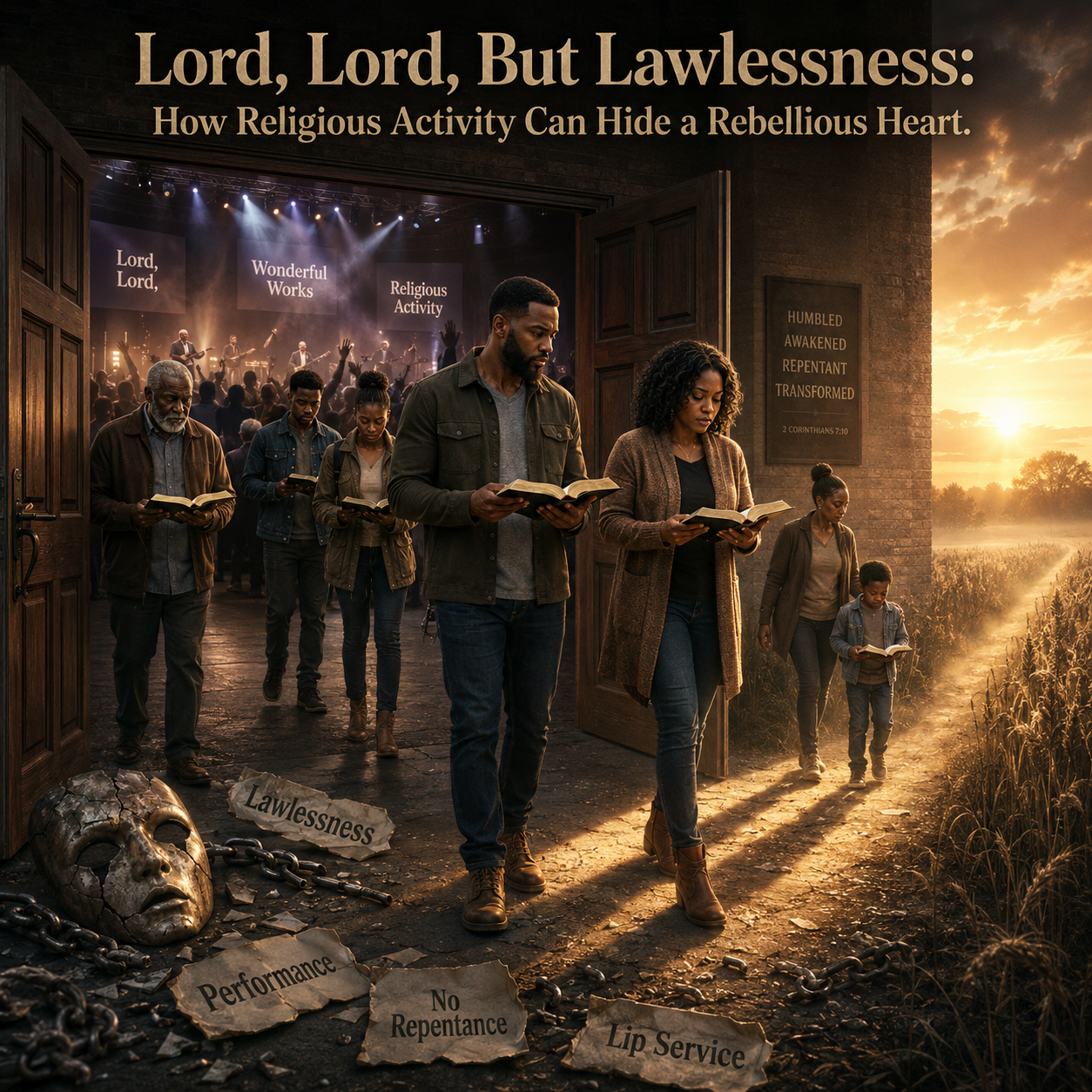
- Lord, Lord, But Lawlessness: How Religious Activity Can Hide a Rebellious Heart
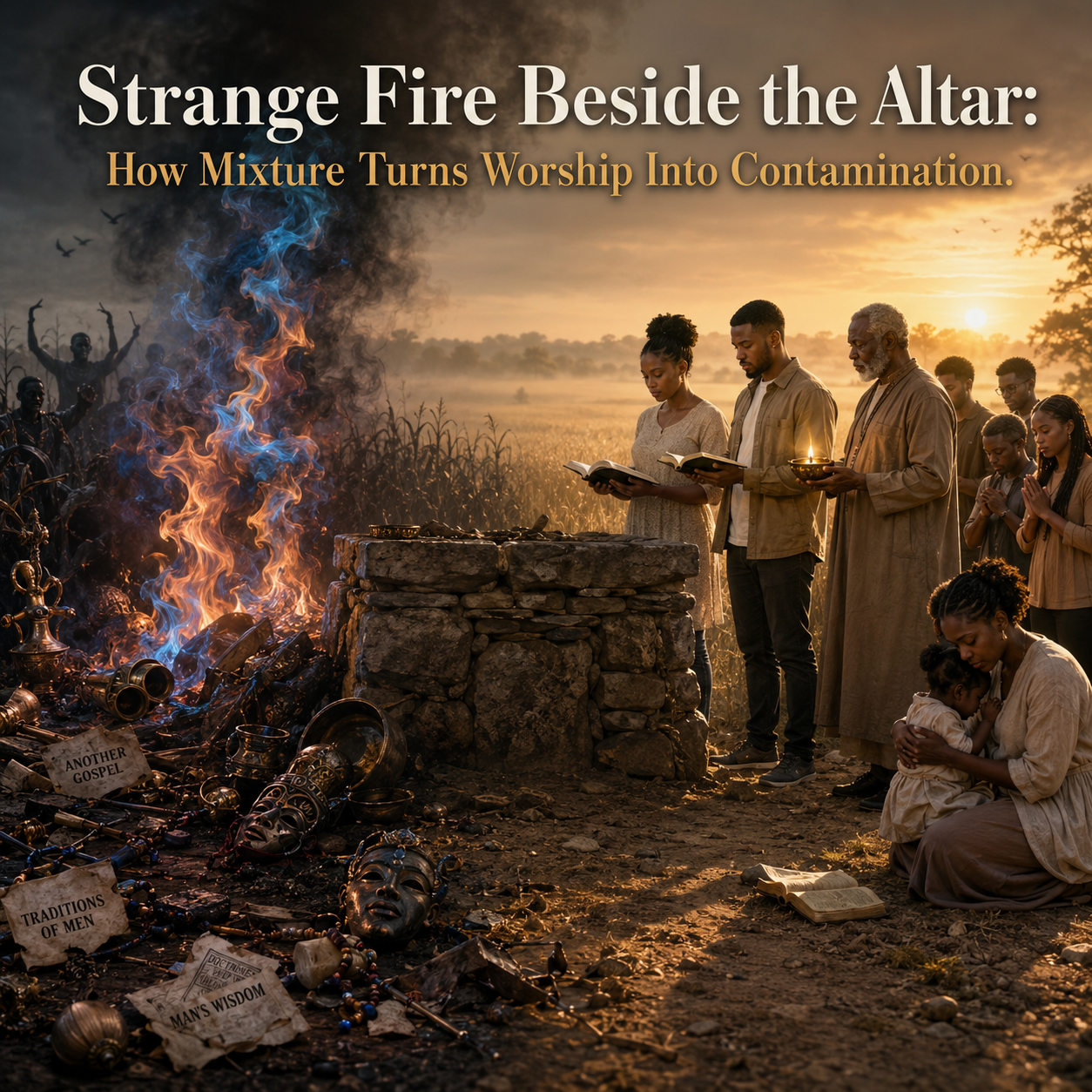
- Strange Fire Beside the Altar: How Mixture Turns Worship Into Contamination
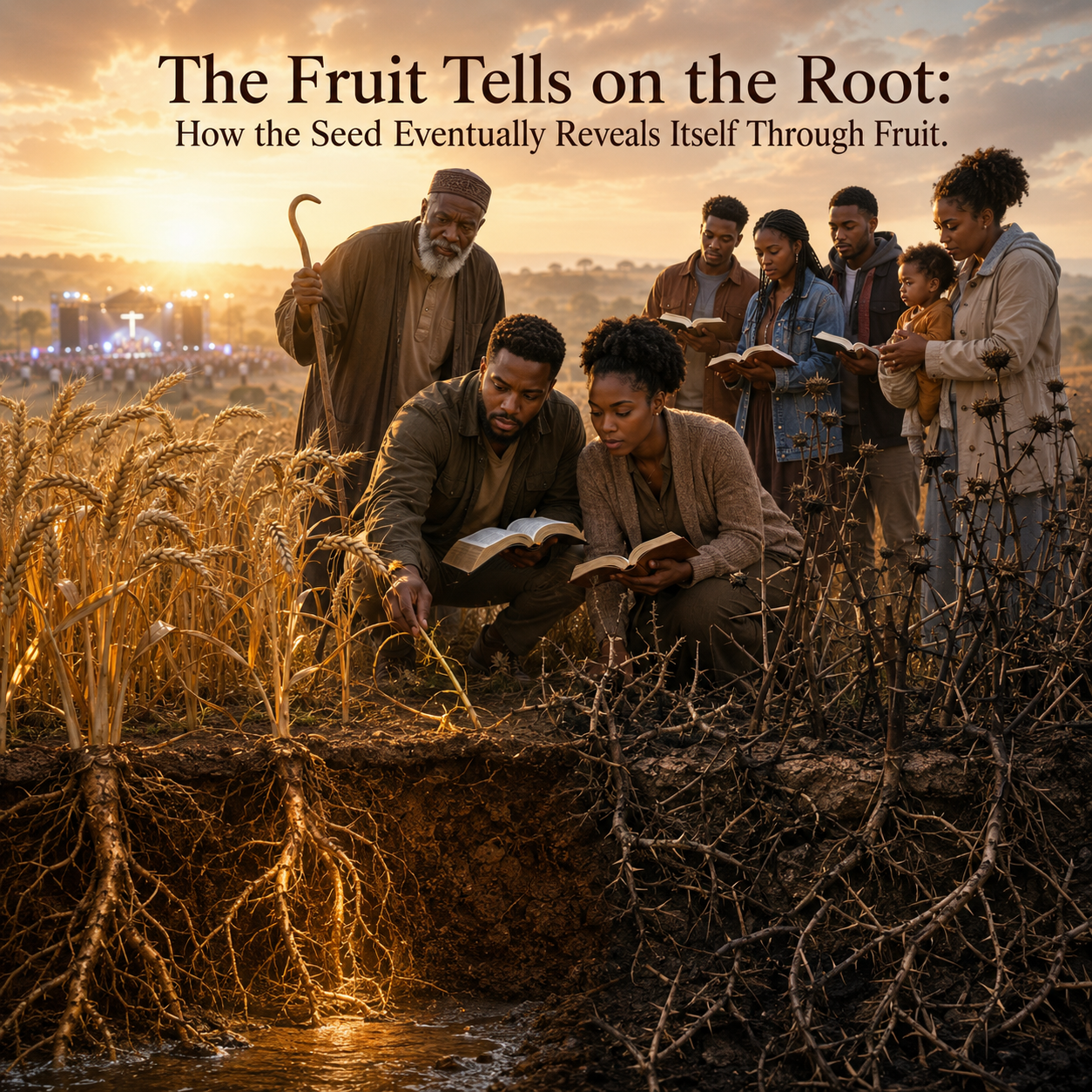
- The Fruit Tells on the Root: How the Seed Eventually Reveals Itself Through Fruit
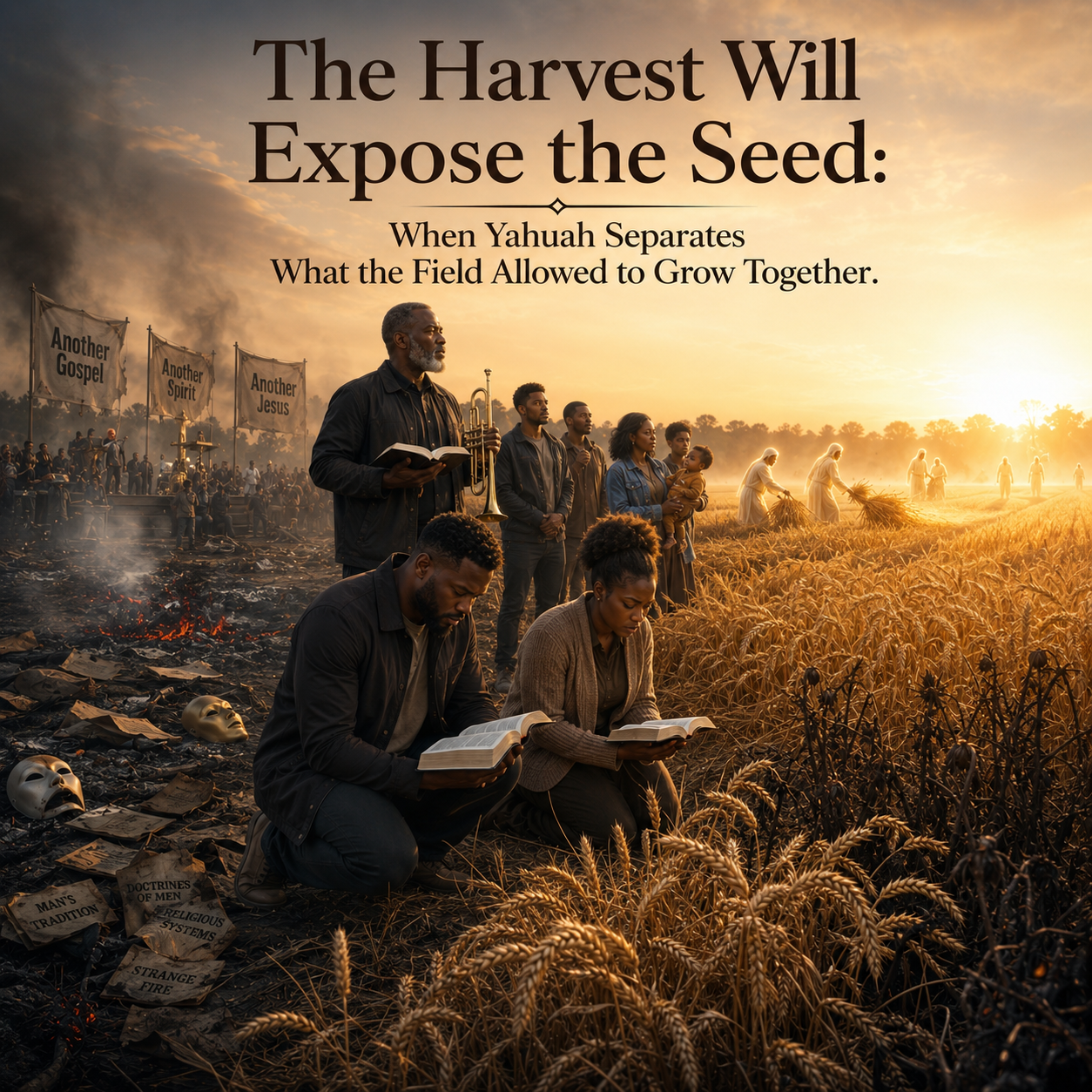
- The Harvest Will Expose the Seed: When Yahuah Separates What the Field Allowed to Grow Together
Shalom mishpacha. We are now in Part 5 of this series, and this is where we have to deal with worship. Not just songs. Not just gatherings. Not just religious moments. Worship.
Because worship is not whatever makes us feel spiritual. Worship is not whatever tradition handed us. Worship is not whatever the crowd enjoys. Worship is not whatever looks beautiful to the eyes, sounds emotional to the ears, and feels powerful in the room.
Worship belongs to Yahuah.
And because worship belongs to Yahuah, He is the one who defines what is acceptable.
That is where this study cuts deeply, because the religion of the tares loves mixture. It loves to bring strange fire beside the altar and still call it holy. It loves to take the ways of the nations, put religious language over them, and say, “This is for Yahuah.” It loves to mix truth with tradition, obedience with rebellion, Scripture with culture, and holiness with flesh, then call the mixture worship.
But Yahuah has never treated mixture as harmless.
Wayyiqra (Leviticus) 10:1–2 says Nadab and Abihu, the sons of Aharon, took their censers, put fire in them, placed incense on it, and offered strange fire before Yahuah, which He had not commanded them. Then fire went out from Yahuah and consumed them, and they died before Yahuah.
Beside this, we place Wayyiqra (Leviticus) 10:10, where the priests were commanded to put a difference between holy and unholy, and between unclean and clean.
Beside this, we place Debarim (Deuteronomy) 12:30–32, where Yahuah warns His people not to worship Him according to the ways of the nations and not to add to or diminish from His word.
Beside this, we place Yechezqel (Ezekiel) 22:26, where Yahuah rebukes priests who violate His Torah, profane His holy things, and put no difference between holy and profane.
So from the beginning, the warning is clear: all fire at the altar is not holy fire.
That is a hard word for a generation that loves atmosphere more than obedience.
Nadab and Abihu were not standing outside the camp mocking Yahuah. They were not atheists. They were not strangers to the priesthood. They were sons of Aharon. They were near holy things. They had access. They had position. They had religious responsibility. They were close to the altar.
But their fire was strange.
That means proximity to holy things does not automatically make the offering acceptable.
A person can be near the altar and still bring what Yahuah never commanded.
A person can be in a religious office and still mishandle worship.
A gathering can look spiritual and still carry strange fire.
A people can say, “This is for Yahuah,” while offering Him what He did not ask for.
And this is the heart-piercing line: mixture is not worship with flavor; it is rebellion with decoration.
That is what the flesh does. The flesh does not always say, “I hate Yahuah.” Sometimes the flesh says, “Let me worship Yahuah my way.” Sometimes the flesh says, “Let me keep the familiar thing and rename it.” Sometimes the flesh says, “Let me bring what the nations do and dedicate it to the Most High.” Sometimes the flesh says, “Yahuah knows my heart,” while refusing to let Yahuah command the heart.
But worship is not purified by our intention alone. Worship must agree with the Word.
Bereshith (Genesis) 4:3–7 shows Cain bringing an offering to Yahuah, while Abel also brings his offering. Yahuah respects Abel and his offering, but He does not respect Cain and his offering. Cain becomes angry, and Yahuah warns him that sin is lying at the door.
Beside this, we place Ibrim (Hebrews) 11:4, where Abel’s offering is called more excellent by faith.
Beside this, we place Yahudah (Jude) 11, where Scripture warns of those who go in the way of Cain.
Beside this, we place Mishlei (Proverbs) 21:27, which says the sacrifice of the wicked is abomination, especially when brought with wicked intent.
Cain teaches us something heavy: being religious is not the same as being acceptable.
Cain brought something.
Cain approached.
Cain offered.
Cain had a worship moment.
But Yahuah judged the offering and the heart behind it.
That is why the phrase “Yahuah knows my heart” should make us tremble, not relax. Because yes, He does know the heart. He knows when the heart is humble, and He knows when the heart is stubborn. He knows when worship is submitted, and He knows when worship is self-willed. He knows when we are bringing obedience, and He knows when we are dressing up rebellion.
Yirmeyahu (Jeremiah) 17:9–10 says the heart is deceitful above all things and desperately sick, and Yahuah searches the heart and tests the reins.
Beside this, we place Tehillim (Psalm) 139:23–24, where Dawid says, “Search me, O El, and know my heart.”
Beside this, we place Mishlei (Proverbs) 14:12, where there is a way that seems right to a man, but its end is death.
Beside this, we place Debarim (Deuteronomy) 10:16, where Yahuah commands His people to circumcise the foreskin of their heart and be stiff-necked no more.
So when the heart says, “This feels right,” Scripture says, “Test it.”
When tradition says, “This is how we have always done it,” Scripture says, “To the Torah and to the testimony.”
When the crowd says, “Everybody worships this way,” Scripture says, “Do not follow a multitude to do evil.”
When the flesh says, “Yahuah understands,” Scripture says, “Obey is better than sacrifice.”
Shemu’el Aleph (1 Samuel) 15:22–23 says obedience is better than sacrifice, and rebellion is as the sin of witchcraft; stubbornness is as iniquity and idolatry.
Beside this, we place Yesha’yahu (Isaiah) 1:11–17, where Yahuah rejects multiplied sacrifices, assemblies, and offerings from people whose hands are full of blood and calls them to wash, make clean, and cease to do evil.
Beside this, we place Amos 5:21–24, where Yahuah says He hates their feast days and will not accept their offerings, but calls for judgment to run down as waters and righteousness as a mighty stream.
Beside this, we place Mikhah (Micah) 6:6–8, where Yahuah shows that what He requires is to do justly, love mercy, and walk humbly with Elohim.
That is the pattern. Yahuah does not receive worship as a substitute for obedience.
He does not say, “Keep your rebellion, but sing louder.”
He does not say, “Keep your injustice, but bring more offerings.”
He does not say, “Keep your mixture, but make it emotional.”
He does not say, “Keep your strange fire, but dedicate it to Me.”
The religion of the tares loves a worship that does not require repentance. It loves a worship that lets people cry while refusing to change. It loves a worship that makes flesh feel spiritual without killing it. It loves a worship that has sound, smoke, lights, and language, but no surrender.
But Yahusha said something very different.
Yochanan (John) 4:23–24 says the true worshipers shall worship the Father in spirit and in truth, for the Father seeks such to worship Him. Elohim is Spirit, and they that worship Him must worship Him in spirit and in truth.
Beside this, we place Tehillim (Psalm) 51:17, where a broken and contrite heart is called a sacrifice Elohim will not despise.
Beside this, we place Tehillim (Psalm) 24:3–4, where the one who ascends the hill of Yahuah must have clean hands and a pure heart.
Beside this, we place Yochanan (John) 17:17, where Yahusha says, “Sanctify them through thy truth: thy word is truth.”
True worship is not spirit without truth.
And true worship is not truth without the Ruach.
Spirit and truth.
That means any worship that claims spirit while rejecting truth is not the worship Yahusha described. Any worship that claims truth while lacking humility, love, and the fruit of the Ruach is also not clean. Yahuah is not seeking performance. He is seeking worshipers whose hearts bow under His Word and whose lives agree with the One they claim to honor.
That is why strange fire is so dangerous. Strange fire often feels spiritual, but it is not submitted.
It can be loud but not clean.
It can be beautiful but not obedient.
It can be emotional but not repentant.
It can be ancient-looking but not commanded.
It can be modern and polished but still contaminated.
It can be culturally familiar but spiritually foreign.
It can say “Yahuah” and still resist His instructions.
It can say “Yahusha” and still refuse His walk.
So we have to ask: who defined this worship?
Did Yahuah command it, or did men invent it?
Did the Word establish it, or did tradition preserve it?
Does it produce holiness, or does it protect mixture?
Does it call people out, or does it let them remain comfortable in Babylon?
Because Yahuah warned His people not to copy the worship practices of the nations and then apply them to Him.
Debarim (Deuteronomy) 12:30–31 says not to ask how the nations served their mighty ones and then say, “Even so will I do likewise.” Yahuah says not to do so unto Him.
Beside this, we place Debarim (Deuteronomy) 18:9, where His people are told not to learn to do according to the abominations of the nations.
Beside this, we place Wayyiqra (Leviticus) 18:3–4, where Yahuah says not to do according to the doings of Egypt or Kena’an, but to do His judgments and guard His ordinances.
Beside this, we place Qorintiyim Sheniy (2 Corinthians) 6:14–17, where Scripture asks what fellowship righteousness has with lawlessness, what communion light has with darkness, and then says, “Come out from among them.”
Come out.
That is the call that strange fire hates.
Strange fire wants to bring Egypt to the altar.
Strange fire wants to bring Babylon to the altar.
Strange fire wants to bring the nations’ ways to the altar.
Strange fire wants to bring flesh to the altar and leave it alive.
But Yahuah says, “Come out.”
No one can follow the cloud and remain submitted to Pharaoh.
No one can drink from Babylon’s cup and call it covenant wine.
No one can bring the nations’ altar into Yahuah’s house and call it set-apart worship.
No one can mix clean and unclean and then act surprised when contamination spreads.
Chaggai (Haggai) 2:11–14 teaches that uncleanness spreads by contact, and Yahuah says the people and their works were unclean before Him.
Beside this, we place Qorintiyim Aleph (1 Corinthians) 5:6–8, where a little leaven leavens the whole lump, and the people are told to keep the feast with unleavened sincerity and truth.
Beside this, we place Galatiyim (Galatians) 5:9, where again a little leaven leavens the whole lump.
Beside this, we place Ya’aqob (James) 4:4, where friendship with the world is enmity with Elohim.
A little mixture is not little once it starts growing.
A little leaven does not stay in the corner of the dough.
A little strange fire does not remain harmless.
A little compromise becomes culture.
A little culture becomes tradition.
A little tradition becomes doctrine.
A little doctrine becomes identity.
And before long, people are defending contamination because it feels like home.
That is one of the saddest things about inherited lies. People may defend what wounded them because it is familiar. They may defend what misled them because it came with memories, music, family, emotion, and comfort. They may defend Babylon’s cup because they learned to sip it in religious settings.
But Yahuah’s mercy does not leave His people intoxicated.
Chazon (Revelation) 18:4 says, “Come out of her, my people, that ye be not partakers of her sins.”
Beside this, we place Yirmeyahu (Jeremiah) 51:6, where the call is to flee out of the midst of Babylon and deliver every man his soul.
Beside this, we place Yesha’yahu (Isaiah) 52:11, where Yahuah says to depart, go out from there, touch no unclean thing, and be clean.
Beside this, we place Zakaryah (Zechariah) 2:6–7, where the call goes forth to flee from the land of the north and deliver yourself from the daughter of Babylon.
Coming out is not only leaving a place.
It is leaving a mixture.
It is leaving a mindset.
It is leaving a cup.
It is leaving worship Yahuah never commanded.
It is leaving the version of religion that lets the flesh stay alive while calling itself delivered.
And this brings us back to the altar. An altar is a place of surrender. The flesh wants to turn the altar into a stage. But the altar was never meant to entertain the flesh. It was meant to consume what belonged to Yahuah.
Romiyim (Romans) 12:1 says to present our bodies as a living sacrifice, holy and acceptable unto Elohim, which is our reasonable service.
Beside this, we place Galatiyim (Galatians) 5:24, where those who belong to Messiah have crucified the flesh with its passions and desires.
Beside this, we place Qolasim (Colossians) 3:5, where we are told to put to death what is earthly in us.
Beside this, we place Romiyim (Romans) 8:13, where those led by the Ruach put to death the deeds of the body.
True worship puts the flesh on the altar.
Strange fire puts the flesh on the microphone.
True worship bows.
Strange fire performs.
True worship says, “Search me.”
Strange fire says, “Watch me.”
True worship trembles at the Word.
Strange fire edits the Word to protect the show.
That is why the religion of the tares can build impressive altars and still be false. The issue is not how beautiful the altar looks. The issue is what fire is on it, what spirit is behind it, what seed produced it, and whether Yahuah commanded it.
Yahusha exposed vain worship clearly.
Mattithyahu (Matthew) 15:8–9 says, “This people draweth nigh unto me with their mouth, and honoureth me with their lips; but their heart is far from me. But in vain they do worship me, teaching for doctrines the commandments of men.”
Beside this, we place Marqus (Mark) 7:6–9, where Yahusha rebukes those who lay aside the commandment of Elohim to hold the tradition of men.
Beside this, we place Qolasim (Colossians) 2:8, where believers are warned against being spoiled through philosophy, vain deceit, tradition of men, and the elements of the world.
Beside this, we place Qolasim (Colossians) 2:20–23, where man-made religion and will-worship have an appearance of wisdom but do not truly deal with the flesh.
That phrase matters: will-worship.
Worship according to the will of man.
Worship shaped by human desire.
Worship that looks strict, emotional, impressive, or ancient, but was not born from obedience.
That is strange fire.
And Yahusha said vain worship happens when people teach commandments of men as doctrine. So the danger is not only pagan-looking rituals. The danger is also man-made religious tradition that replaces Yahuah’s command.
Sometimes mixture looks obviously worldly.
Sometimes mixture looks very religious.
Sometimes mixture is a stage filled with smoke and lights.
Sometimes mixture is a robe, a ritual, and a man-made rule.
Sometimes mixture is a tradition that has been repeated so long people think Yahuah spoke it.
That is why the test must be Scripture, not familiarity.
Ma’aseh (Acts) 17:11 says the Bereans received the word with readiness and searched the Scriptures daily to see whether those things were so.
Beside this, we place Timotheos Sheniy (2 Timothy) 2:15, where the servant is told to study to show himself approved.
Beside this, we place Thessaloniqim Aleph (1 Thessalonians) 5:21, which says to prove all things and hold fast what is good.
Beside this, we place Yesha’yahu (Isaiah) 8:20, “To the Torah and to the testimony.”
That is how we test worship.
Where is it written?
What fruit does it produce?
Does it honor Yahuah’s instructions?
Does it lead people to repentance?
Does it agree with Yahusha’s walk?
Does it separate clean from unclean?
Does it produce humility and obedience?
Does it require the flesh to die?
Or does it let men bring whatever they want and call it holy?
This is especially important because another gospel, another spirit, and another Jesus all produce another worship.
Another gospel produces worship without repentance.
Another spirit produces worship without holiness.
Another Jesus produces worship without obedience to the true Master.
And when those three work together, the tares can fill a field with religious activity while the wheat wonders why the worship feels off.
That is why discernment matters.
Yochanan Aleph (1 John) 4:1 says to test the spirits.
Beside this, we place Mattithyahu (Matthew) 7:16–20, where Yahusha says trees are known by fruit.
Beside this, we place Galatiyim (Galatians) 5:19–23, where the works of the flesh are contrasted with the fruit of the Ruach.
Beside this, we place Ya’aqob (James) 3:11–18, where wisdom from above is pure, peaceable, gentle, full of mercy and good fruits, while earthly wisdom brings confusion and every evil work.
If worship produces confusion, pride, sensuality, lawlessness, rebellion, hatred, and mixture, we need to stop calling the fire holy.
If worship produces repentance, humility, obedience, reverence, clean fruit, and love for truth, then we are seeing the fruit of a different seed.
And again, this is not a call to become arrogant. This is not a call to walk around despising people. This is a call to tremble. Because strange fire is not only “their problem.” We have to ask if we have offered it too.
Have I offered Yahuah worship while refusing correction?
Have I lifted hands while hiding rebellion?
Have I defended traditions I never tested by Scripture?
Have I called something holy because it moved me emotionally?
Have I brought flesh to the altar and asked Yahuah to bless it?
Have I mistaken familiarity for truth?
Have I kept one foot in Babylon and called it balance?
Have I turned the altar into a place of performance instead of surrender?
Have I worshiped the way I prefer instead of the way Yahuah commands?
These questions are not meant to shame the humble. They are meant to wake the field.
Because Yahuah is merciful. He exposes strange fire before it destroys. He calls us out before the cup is judged. He corrects worship before the harvest. He shines light not to mock us, but to cleanse us.
Chazon (Revelation) 3:19 says, “As many as I love, I rebuke and chasten: be zealous therefore, and repent.”
Beside this, we place Mishlei (Proverbs) 3:11–12, where Yahuah corrects the one He loves.
Beside this, we place Ibrim (Hebrews) 12:10–11, where correction produces the peaceable fruit of righteousness.
Beside this, we place Tehillim (Psalm) 119:67, where Dawid says, “Before I was afflicted I went astray: but now have I kept thy word.”
Correction is mercy when it turns us back.
So if Yahuah is correcting our worship, that is not rejection. That is love.
If He is exposing mixture, that is not cruelty. That is cleansing.
If He is showing us that something we inherited was not from Him, that is not Him embarrassing us. That is Him delivering us.
But once He shows us, we must respond.
We cannot keep offering strange fire because it is familiar.
We cannot keep mixing because it is comfortable.
We cannot keep defending what the Word exposes.
We cannot keep drinking from Babylon’s cup because the cup has family memories attached to it.
We cannot keep calling man-made religion “set apart” when Yahuah calls us back to spirit and truth.
Melakim Aleph (1 Kings) 18:21 says Eliyahu came near to all the people and said, “How long halt ye between two opinions? if Yahuah be Elohim, follow him: but if Ba’al, then follow him.”
Beside this, we place Yehoshua (Joshua) 24:15, where Yehoshua says to choose this day whom you will serve.
Beside this, we place Debarim (Deuteronomy) 30:19–20, where Yahuah sets life and death before His people and calls them to choose life, love Him, obey His voice, and cleave to Him.
Beside this, we place Mattithyahu (Matthew) 6:24, where Yahusha says no man can serve two masters.
The call is decision.
How long will we limp between two opinions?
How long will we mix?
How long will we say “Yahuah” while clinging to practices He never commanded?
How long will we say “Yahusha” while following a version shaped by flesh?
How long will we call ourselves set apart while defending contaminated worship?
How long will we bring strange fire beside the altar and expect the Holy One to accept what He never asked for?
The Father is calling His people back to clean worship.
Not dead worship.
Not stiff worship.
Not prideful worship.
Clean worship.
Worship in spirit and truth.
Worship with clean hands and a pure heart.
Worship that trembles at the Word.
Worship that flows from repentance.
Worship that agrees with the life of Yahusha.
Worship that does not borrow the nations’ altar and put Yahuah’s name on it.
Worship that comes out of Babylon.
Worship that puts the flesh to death.
Worship that says, “Abba, not my will, but Yours.”
Yochanan Aleph (1 John) 2:6 says the one who says he abides in Yahusha ought also to walk even as He walked.
Beside this, we place Kepha Aleph (1 Peter) 2:21–22, where Messiah left us an example that we should follow His steps.
Beside this, we place Yochanan (John) 15:10, where Yahusha says if we keep His commandments, we abide in His love.
Beside this, we place Ibrim (Hebrews) 13:15–16, where praise is called the fruit of lips giving thanks to His name, and doing good and sharing are sacrifices well pleasing to Elohim.
Worship is a life, not just a moment.
The song must agree with the walk.
The lips must agree with the heart.
The altar must agree with obedience.
The offering must agree with truth.
The name we speak must agree with the life we live.
Because Yahuah is not fooled by performance. He sees the seed.
That brings us back to the series theme. The tares can worship. The tares can sing. The tares can build altars. The tares can light fires. The tares can gather crowds. The tares can use spiritual words. But the harvest will expose the seed.
Mattithyahu (Matthew) 13:30 says to let both grow together until the harvest, and in the time of harvest the reapers will gather the tares to burn and gather the wheat into the barn.
Beside this, we place Mal’akhi (Malachi) 3:18, where people will discern between the righteous and the wicked, between one who serves Elohim and one who does not.
Beside this, we place Qorintiyim Aleph (1 Corinthians) 3:13, where every man’s work will be made manifest because the day will declare it, and it will be revealed by fire.
Beside this, we place Ibrim (Hebrews) 12:28–29, where we are told to serve Elohim acceptably with reverence and godly fear, for our Elohim is a consuming fire.
The harvest will test the field.
The fire will test the work.
The consuming fire will reveal whether the fire we offered was holy or strange.
So let us not wait until judgment to test the altar.
Let the Word test it now.
Let repentance test it now.
Let the Ruach test it now.
Let Scripture search our worship now.
Let Yahuah cleanse the mixture now.
Because the mercy of Yahuah is that He gives warning before the final fire.
Mishpacha, the altar is not a playground. Worship is not a costume. Holiness is not decoration. The name of Yahuah is not a label we place over whatever the flesh already wanted to do.
He is set apart.
His worship must be set apart.
His people must be set apart.
His altar must not be polluted with strange fire.
So reject mixture.
Reject will-worship.
Reject inherited contamination.
Reject the ways of the nations when they are brought into worship.
Reject the smooth voice that says Yahuah accepts whatever is sincere.
Reject the tare religion that wants worship without obedience.
Return to spirit and truth.
Return to clean hands and a pure heart.
Return to the Word.
Return to the fear of Yahuah.
Return to the example of Yahusha.
Return to worship that bows instead of performs.
Because Yahuah is not looking for strange fire beside the altar.
He is looking for a people who worship Him in spirit and in truth.
Let us close with prayer.
Abba Yahuah, we come before You with humility and fear. Search our worship. Search our hearts. Search our homes. Search what we have inherited, what we have practiced, what we have defended, and what we have called holy without testing it by Your Word.
Forgive us for every strange fire we have offered. Forgive us for bringing mixture to Your altar. Forgive us for copying the ways of the nations and trying to dedicate them to You. Forgive us for worshiping according to preference, tradition, emotion, and flesh instead of spirit and truth.
Teach us the difference between holy and profane, clean and unclean, truth and mixture. Give us courage to come out of Babylon’s cup. Give us humility to release what is familiar when Your Word exposes it. Give us clean hands, pure hearts, and worship that agrees with obedience.
Let the fire in us be clean. Let our praise be acceptable. Let our lives become living sacrifices, holy and pleasing before You. Put Your Ruach within us and cause us to walk in Your statutes. Teach us to follow Yahusha, not a version shaped by flesh. Teach us to worship You as You command, not as the nations do.
Remove strange fire from the altar. Remove tare religion from the field. Remove mixture from our homes. Remove pride from our discernment. Let our worship be in spirit and truth.
In the name of Yahusha Ha’Mashiach, cleanse the altar, purify the people, and restore clean worship before You. Amein.
Leave a Reply