
- The Enemy Sowed While Men Slept: How False Seed Enters the Field When Watchfulness Dies
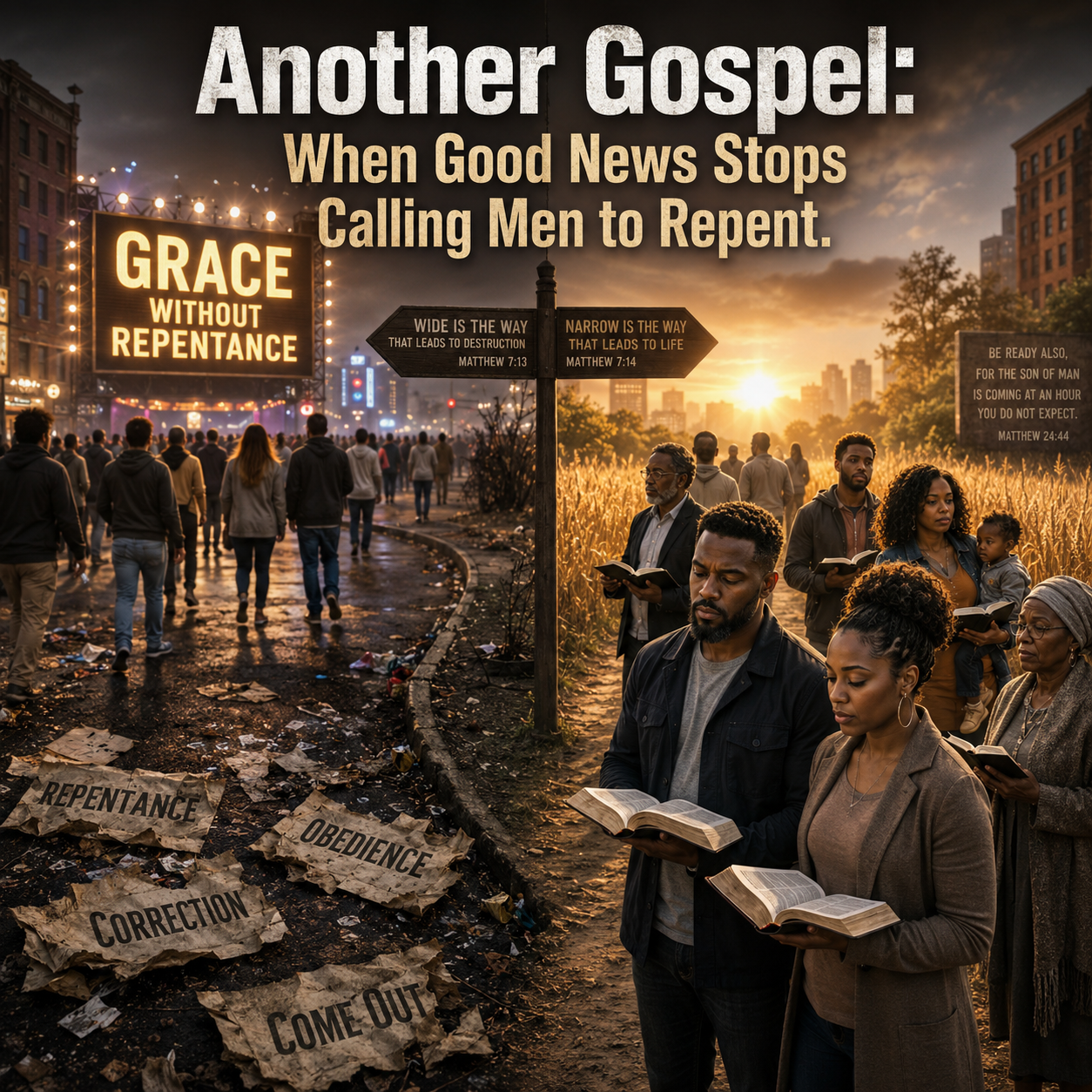
- Another Gospel: When Good News Stops Calling Men to Repent
- Another Spirit: Testing the Fire Before You Call It Holy
- Another Jesus: The Messiah the Flesh Can Tolerate
- Lord, Lord, But Lawlessness: How Religious Activity Can Hide a Rebellious Heart
- Strange Fire Beside the Altar: How Mixture Turns Worship Into Contamination
- The Fruit Tells on the Root: How the Seed Eventually Reveals Itself Through Fruit
- The Harvest Will Expose the Seed: When Yahuah Separates What the Field Allowed to Grow Together
Shalom mishpacha. We are continuing this series from the field where Yahusha said the enemy sowed tares among the wheat. In Part 1, we dealt with the sleep. We dealt with the field. We dealt with the enemy’s strategy. We dealt with how false seed enters when watchfulness dies.
Now in Part 2, we have to deal with the message that grows from false seed.
Because once the enemy plants tares in the field, he does not leave them silent. False seed eventually produces false speech. A counterfeit root eventually produces a counterfeit gospel. And this is where the danger becomes subtle, because another gospel does not always sound wicked at first. Sometimes it sounds comforting. Sometimes it sounds loving. Sometimes it sounds spiritual. Sometimes it even sounds like freedom.
But if the gospel being preached does not call men and women to repent, turn from sin, come out of lawlessness, and return to Yahuah through Yahusha, then it is not the Besorah of the Kingdom. It is another gospel.
And another gospel is not harmless.
Sha’ul did not treat it like a small disagreement. He did not say, “Well, everybody has their own version.” He did not say, “As long as people feel loved, let it be.” He did not say, “At least they are talking about Messiah.” No. He spoke sharply because he understood that if the message is corrupted, the people are endangered.
Galatiyim (Galatians) 1:6–7 says, “I marvel that ye are so soon removed from him that called you into the grace of Messiah unto another gospel: which is not another; but there be some that trouble you, and would pervert the gospel of Messiah.”
Beside this, we place Qorintiyim Sheniy (2 Corinthians) 11:4, where Sha’ul warns about another Jesus, another spirit, and another gospel.
Beside this, we place Yahudah (Jude) 3–4, where the believers are told to contend for the faith once delivered, because certain men crept in unawares and turned grace into lasciviousness.
Beside this, we place Ma’aseh (Acts) 20:29–30, where Sha’ul warned that grievous wolves would enter and men would arise speaking perverse things to draw disciples after themselves.
So the issue is not simply that people used the word “gospel.” The issue is that they perverted it.
A perverted gospel is dangerous because it keeps the language but changes the direction.
The true gospel says, “Turn.”
Another gospel says, “Stay as you are.”
The true gospel says, “Repent and be converted.”
Another gospel says, “Do not let anyone make you feel convicted.”
The true gospel says, “Yahusha came to save His people from their sins.”
Another gospel says, “Yahusha came so you can feel safe while continuing in sin.”
The true gospel says, “Grace teaches us to deny ungodliness.”
Another gospel says, “Grace means ungodliness is no longer a problem.”
That is not good news. That is spiritual anesthesia.
And here is the punchline we have to carry through this whole study: a gospel that does not call you out of sin cannot save you from the house that sin built.
Mattithyahu (Matthew) 1:21 says, “And she shall bring forth a son, and thou shalt call his name Yahusha: for he shall save his people from their sins.”
Beside this, we place Luqas (Luke) 1:68–75, where Yahuah is praised for visiting and redeeming His people, delivering them so they might serve Him in holiness and righteousness.
Beside this, we place Ma’aseh (Acts) 3:19, which says, “Repent ye therefore, and be converted, that your sins may be blotted out.”
Beside this, we place Titus 2:14, which says Messiah gave Himself for us to redeem us from all lawlessness and purify unto Himself a peculiar people zealous of good works.
So from the announcement of His birth, the mission is clear. Yahusha does not come to save His people in their sins while leaving sin enthroned. He comes to save His people from their sins.
That means the true Besorah is deliverance, not decoration.
It is not Yahuah putting a spiritual ribbon on bondage and calling it freedom. It is not Yahusha standing outside the prison cell saying, “At least you are loved in there.” No. He comes with authority to break chains, call the prisoner out, wash the unclean, restore the scattered, and bring the rebellious back under the rule of Yahuah.
So when a message says, “You can have Messiah without repentance,” that message is not the gospel of Yahusha. It is another gospel wearing grace language.
When a message says, “You can receive forgiveness while refusing correction,” that message is not the gospel of Yahusha. It is another gospel wearing mercy language.
When a message says, “You can love Yahuah while despising His commandments,” that message is not the gospel of Yahusha. It is another gospel wearing love language.
And when a message says, “You can call Him Master without doing what He says,” Yahusha already answered that.
Luqas (Luke) 6:46 says, “And why call ye me, Master, Master, and do not the things which I say?”
Beside this, we place Mattithyahu (Matthew) 7:21–23, where Yahusha says not everyone who says “Lord, Lord” will enter the Kingdom, but he who does the will of His Father.
Beside this, we place Yochanan (John) 14:15, where Yahusha says, “If ye love me, keep my commandments.”
Beside this, we place Yochanan Aleph (1 John) 2:3–4, where Scripture says the one who says “I know Him” but does not keep His commandments is a liar.
That is why another gospel has to weaken repentance. It has to. Because if repentance stands, the counterfeit falls.
Repentance exposes false comfort. Repentance exposes false grace. Repentance exposes religious excuses. Repentance forces the heart to stop hiding behind words and actually turn.
That is why the enemy loves a gospel that gives people emotional relief without spiritual transformation.
He loves a gospel that lets people cry at the altar and return unchanged.
He loves a gospel that makes people feel forgiven but never teaches them to forsake.
He loves a gospel that celebrates being “covered” while never dealing with what is corrupting the heart underneath the covering.
But the true Word never separates mercy from turning.
Mishlei (Proverbs) 28:13 says, “He that covereth his sins shall not prosper: but whoso confesseth and forsaketh them shall have mercy.”
Beside this, we place Tehillim (Psalm) 32:5, where Dawid says he acknowledged his sin and Yahuah forgave the iniquity of his sin.
Beside this, we place Yesha’yahu (Isaiah) 55:6–7, where the wicked is told to forsake his way and return to Yahuah, who will abundantly pardon.
Beside this, we place Yechezqel (Ezekiel) 18:30–32, where Yahuah says, “Repent, and turn yourselves from all your transgressions.”
Do you hear the mercy in that?
Yahuah does not merely say, “You are wrong.” He says, “Turn, and live.”
That is the heart of repentance. Repentance is not condemnation. Repentance is Yahuah opening a door out of death.
Another gospel paints repentance as shame, but Scripture presents repentance as mercy.
Another gospel treats conviction like an enemy, but conviction is often the hand of Yahuah pulling you back from destruction.
Another gospel says, “Do not let anybody judge you,” while the true Word says, “Judge yourself now so you do not fall under judgment later.”
Qorintiyim Aleph (1 Corinthians) 11:31–32 says if we would judge ourselves, we should not be judged; but when we are judged, we are chastened so that we should not be condemned with the world.
Beside this, we place Ibrim (Hebrews) 12:6–11, where Yahuah chastens those He loves, and afterward it yields the peaceable fruit of righteousness.
Beside this, we place Chazon (Revelation) 3:19, where Yahusha says, “As many as I love, I rebuke and chasten: be zealous therefore, and repent.”
Beside this, we place Tehillim (Psalm) 119:67, where Dawid says, “Before I was afflicted I went astray: but now have I kept thy word.”
So correction is not proof that Yahuah hates you. Correction is proof that Yahuah is not finished with you.
The true gospel does not hide correction from the people. It brings correction with mercy and says, “Come home.”
But another gospel cannot survive that kind of correction because another gospel is designed to keep flesh comfortable.
That is why another gospel always has to redefine love.
In Scripture, love rejoices in truth. In another gospel, love protects feelings from truth.
In Scripture, love corrects. In another gospel, correction is called hate.
In Scripture, love obeys. In another gospel, obedience is called bondage.
In Scripture, love warns. In another gospel, warning is called judgmental.
But Yahuah’s love does not lie to keep people relaxed on the road to destruction.
Yochanan Aleph (1 John) 5:3 says, “For this is the love of Elohim, that we keep his commandments: and his commandments are not grievous.”
Beside this, we place Yochanan Sheniy (2 John) 1:6, which says love is that we walk after His commandments.
Beside this, we place Yochanan (John) 15:10, where Yahusha says if we keep His commandments, we abide in His love.
Beside this, we place Qorintiyim Aleph (1 Corinthians) 13:6, where love rejoices not in iniquity, but rejoices in the truth.
That means any gospel that separates love from obedience is already moving in corruption.
Love without truth becomes flattery.
Grace without repentance becomes permission.
Mercy without turning becomes deception.
Faith without obedience becomes dead speech.
And that is exactly why Ya’aqob speaks so plainly.
Ya’aqob (James) 2:17 says, “Even so faith, if it hath not works, is dead, being alone.”
Beside this, we place Ya’aqob (James) 2:18, where he says, “I will shew thee my faith by my works.”
Beside this, we place Eph’siyim (Ephesians) 2:8–10, where we are saved by grace through faith, not by works, yet created in Messiah Yahusha unto good works.
Beside this, we place Mattithyahu (Matthew) 3:8, where Yochanan the Immerser says, “Bring forth therefore fruits meet for repentance.”
So let us keep the balance of Scripture.
We are not saved by works of self-righteousness.
But true salvation produces obedient fruit.
We are not delivered because we earned mercy.
But mercy teaches us to forsake rebellion.
We are not made clean because we performed well.
But once Yahuah washes us, we do not run back to the mud and call that freedom.
Another gospel loves to accuse obedience of being legalism because it wants to protect lawlessness. But Scripture does not call obedience legalism. Scripture calls obedience love, faithfulness, wisdom, and fruit.
Legalism is when men use commandments, traditions, or religious performance to justify themselves apart from true faith and humble submission to Yahuah.
Obedience is when a redeemed heart says, “Abba, Your Word is right, and I want to walk in it.”
Those are not the same thing.
The enemy wants people confused right there. He wants people to hear “obedience” and think “bondage.” But Yahusha did not speak that way.
Yochanan (John) 8:31–32 says, “If ye continue in my word, then are ye my disciples indeed; and ye shall know the truth, and the truth shall make you free.”
Beside this, we place Yochanan (John) 8:34–36, where Yahusha says whoever commits sin is the servant of sin, but the Son makes free indeed.
Beside this, we place Tehillim (Psalm) 119:45, where Dawid says, “And I will walk at liberty: for I seek thy precepts.”
Beside this, we place Romiyim (Romans) 6:16–18, where Sha’ul says we are servants to the one we obey, whether sin unto death or obedience unto righteousness.
Freedom in Scripture is not freedom to remain in sin. Freedom is deliverance from sin’s mastery.
So when another gospel says, “You are free now, so obedience does not matter,” it is not preaching freedom. It is preaching a return to bondage with new vocabulary.
That is why Sha’ul asked a question many modern religious systems do not want to sit with.
Romiyim (Romans) 6:1–2 says, “What shall we say then? Shall we continue in sin, that grace may abound? Elohim forbid. How shall we, that are dead to sin, live any longer therein?”
Beside this, we place Romiyim (Romans) 6:12, which says not to let sin reign in our mortal body.
Beside this, we place Romiyim (Romans) 6:14–15, where Sha’ul again says we are not to sin because we are under grace.
Beside this, we place Yochanan Aleph (1 John) 3:6–9, where Scripture says the one who abides in Him does not practice sin.
Grace does not enthrone sin. Grace breaks sin’s throne.
Grace does not say, “Stay dead.” Grace says, “Rise and walk.”
Grace does not say, “Keep serving Pharaoh.” Grace says, “Come out of Egypt.”
Grace does not say, “Keep drinking Babylon’s cup.” Grace says, “Come out of her, My people.”
That is why another gospel has to make people suspicious of repentance, because repentance is the road out.
Ma’aseh (Acts) 2:38 says, “Repent, and be immersed every one of you in the name of Yahusha Messiah for the remission of sins.”
Beside this, we place Ma’aseh (Acts) 17:30, where Elohim commands all men everywhere to repent.
Beside this, we place Ma’aseh (Acts) 26:20, where Sha’ul preached that people should repent, turn to Elohim, and do works fitting repentance.
Beside this, we place Luqas (Luke) 24:47, where repentance and remission of sins should be preached in Messiah’s name among all nations.
This was not a side note in the early message. Repentance was central.
Yochanan the Immerser preached repentance.
Yahusha preached repentance.
The emissaries preached repentance.
Sha’ul preached repentance.
So if a modern message claims to preach the gospel but treats repentance like an outdated burden, that message has departed from the foundation.
And let us be honest. Many people do not reject repentance because it is unclear. They reject repentance because repentance confronts what they still want to keep.
Repentance confronts the private sin.
Repentance confronts the false worship.
Repentance confronts the pride.
Repentance confronts the bitterness.
Repentance confronts the excuses.
Repentance confronts the family tradition.
Repentance confronts the inherited lies.
Repentance confronts the version of “Jesus” that allows lawlessness.
And this is where another gospel becomes attractive. It offers people a Messiah who does not confront their idols.
But Yahusha of Scripture confronts idols.
He confronts hypocrisy.
He confronts false worship.
He confronts man-made tradition.
He confronts lawlessness.
He confronts lukewarmness.
He confronts the heart.
Marqus (Mark) 7:6–9 says the people honor with lips while their heart is far away, teaching commandments of men, and laying aside the commandment of Elohim to hold tradition.
Beside this, we place Mattithyahu (Matthew) 15:3, where Yahusha asks, “Why do ye also transgress the commandment of Elohim by your tradition?”
Beside this, we place Yirmeyahu (Jeremiah) 7:8–10, where Yahuah rebukes those who trust in lying words, commit sin, and then stand before Him as though delivered to do abominations.
Beside this, we place Yirmeyahu (Jeremiah) 23:16–17, where false prophets speak visions of their own heart and tell those who despise Yahuah that peace shall be upon them.
That last passage cuts deep because it sounds like the spirit of another gospel. False prophets told rebellious people, “Peace.” They strengthened the hands of evildoers by refusing to call them to turn.
Yirmeyahu (Jeremiah) 23:22 says if those prophets had stood in Yahuah’s counsel, they would have caused His people to hear His words and turned them from their evil way.
Beside this, we place Yechezqel (Ezekiel) 13:10, where false prophets seduced the people by saying “Peace” when there was no peace.
Beside this, we place Yechezqel (Ezekiel) 13:22, where Yahuah says they made the heart of the righteous sad and strengthened the hands of the wicked, that he should not return from his wicked way.
Beside this, we place Yesha’yahu (Isaiah) 30:10, where rebellious people say, “Speak unto us smooth things.”
That is another gospel before the phrase “another gospel” even appears in the writings of Sha’ul.
It is the smooth message that refuses to turn people back.
It is the peace message that ignores rebellion.
It is the comfort message that strengthens wicked hands.
It is the religious message that promises safety without repentance.
And Yahuah has always hated that.
Because the purpose of the true message is not to keep people comfortable in danger. The purpose is to turn them so they live.
Yechezqel (Ezekiel) 33:11 says Yahuah has no pleasure in the death of the wicked, but that the wicked turn from his way and live.
Beside this, we place Yechezqel (Ezekiel) 18:23, where Yahuah asks if He has any pleasure in the death of the wicked, and not rather that he should return from his ways and live.
Beside this, we place Kepha Sheniy (2 Peter) 3:9, where Yahuah is longsuffering, not willing that any should perish, but that all should come to repentance.
Beside this, we place Timotheos Aleph (1 Timothy) 2:4, where Yahuah desires all men to be saved and come to the knowledge of truth.
Do you hear the heart of Yahuah?
He is not calling for repentance because He is cruel. He calls for repentance because He wants people to live.
The warning is mercy.
The rebuke is mercy.
The conviction is mercy.
The exposure is mercy.
The true gospel wounds pride so the soul can be healed.
Another gospel protects pride and lets the soul stay sick.
That is why we must learn to ask hard questions about the messages we receive.
Does this gospel produce repentance?
Does it teach people to turn from sin?
Does it identify lawlessness as lawlessness?
Does it honor the words of Yahusha?
Does it point people back to the Father?
Does it produce obedience from the heart?
Does it teach grace as power to walk free, or as permission to remain bound?
Does it make people search the Scriptures, or does it train them to repeat slogans?
Does it call people out of Babylon, or does it make Babylon feel spiritual?
Does it expose the works of darkness, or does it rename them as liberty?
Because the true gospel has fruit.
Qolasim (Colossians) 1:5–6 says the word of truth of the gospel brings forth fruit.
Beside this, we place Philipiyim (Philippians) 1:11, where believers are filled with the fruits of righteousness by Yahusha Messiah.
Beside this, we place Yochanan (John) 15:8, where Yahusha says the Father is glorified when His disciples bear much fruit.
Beside this, we place Galatiyim (Galatians) 5:22–23, where the fruit of the Ruach is listed.
If the gospel is true, fruit will follow.
Not perfection overnight. Not performance for people. Not self-righteous boasting. Fruit.
Conviction.
Repentance.
Humility.
Obedience.
Love for truth.
Hatred of evil.
Mercy.
Clean hands.
A changed walk.
A heart that increasingly says, “Yahuah, not my will, but Yours.”
Another gospel may produce excitement, but not repentance.
It may produce crowds, but not holiness.
It may produce confidence, but not fear of Yahuah.
It may produce noise, but not clean fruit.
It may produce religious identity, but not covenant obedience.
And we need to say this with trembling: if the message does not produce the fruit of Yahuah’s seed, we must test the seed.
Because the tare can imitate the shape, but it cannot produce the grain.
A gospel that excuses sin is not good news. It is a lullaby in a burning house.
A gospel that removes repentance is not mercy. It is malpractice.
A gospel that cancels obedience is not freedom. It is rebellion dressed in religious clothing.
A gospel that gives people another Jesus who never confronts lawlessness is not the Besorah of the Kingdom. It is the religion of the tares.
And this is where the field from Part 1 connects to the message in Part 2. When men sleep, another gospel gets planted. When watchmen stop testing, the perversion spreads. When people stop searching the Scriptures, they become vulnerable to smooth speech. When repentance is removed, tares can grow comfortably beside wheat.
So the call now is simple, but not easy.
Return to the true Besorah.
Return to the message Yahusha preached.
Mattithyahu (Matthew) 4:17 says, “Repent: for the kingdom of heaven is at hand.”
Beside this, we place Marqus (Mark) 1:14–15, where Yahusha came preaching the gospel of the Kingdom and saying, “Repent ye, and believe the gospel.”
Beside this, we place Mattithyahu (Matthew) 6:33, where Yahusha says to seek first the Kingdom of Elohim and His righteousness.
Beside this, we place Mattithyahu (Matthew) 24:14, where this gospel of the Kingdom shall be preached in all the world for a witness.
The gospel Yahusha preached was not a self-help message.
It was not a lawless grace message.
It was not a motivational speech baptized in religious language.
It was the announcement that the Kingdom is near, and men must repent, believe, return, and submit to the reign of Yahuah.
That is why the gospel is good news.
Not because it leaves sinners enslaved.
But because Yahuah has made a way for sinners to be forgiven, cleansed, delivered, restored, and brought under His righteous rule through Yahusha.
The good news is not that rebellion is now safe.
The good news is that captives can be free.
The good news is that the unclean can be washed.
The good news is that the scattered can return.
The good news is that the dead can live.
The good news is that hearts of stone can become hearts of flesh.
The good news is that Yahuah writes His Torah on the heart and causes His people to walk in His ways.
Yirmeyahu (Jeremiah) 31:33 says Yahuah will put His Torah in the inward parts and write it in the heart.
Beside this, we place Yechezqel (Ezekiel) 36:26–27, where Yahuah gives a new heart, puts His Ruach within His people, and causes them to walk in His statutes.
Beside this, we place Ibrim (Hebrews) 8:10, where the renewed covenant promise is repeated.
Beside this, we place Tehillim (Psalm) 40:8, “I delight to do thy will, O my Elohim: yea, thy law is within my heart.”
That is not another gospel. That is the promise of restoration.
Yahuah does not merely pardon the record. He changes the people.
He does not merely cover shame. He restores covenant order.
He does not merely forgive the past. He calls us into a new walk.
So if the gospel being preached never produces a new walk, we need to ask what gospel we have received.
And before we point outward, we need to let that question search us personally.
Have I received the true Besorah, or only religious comfort?
Have I repented, or have I only apologized?
Have I turned, or have I only cried?
Have I submitted to Yahusha, or have I only used His title?
Have I allowed the Word to correct my life, or do I only use the Word to correct others?
Have I come out of Babylon, or am I still defending her cup?
Have I mistaken grace for permission?
Have I mistaken conviction for condemnation?
Have I mistaken tradition for truth?
Have I mistaken emotional relief for deliverance?
This is not asked to crush us. This is asked so we can live.
Because now is mercy time.
Now is the time to let the true gospel confront the false one.
Now is the time to repent.
Now is the time to return.
Now is the time to let Yahuah uproot the lies that were planted in us.
Now is the time to stop calling smooth things “love” when they keep people in bondage.
Now is the time to stop calling rebellion “freedom.”
Now is the time to stop calling lawlessness “grace.”
Now is the time to stop calling another gospel “good news.”
Because the harvest will expose the seed.
And when the harvest comes, the question will not be, “Did the message make people feel comfortable?”
The question will be, “Did it produce fruit worthy of repentance?”
The true gospel still cries out, “Repent, for the Kingdom is at hand.”
The true gospel still announces forgiveness through Yahusha.
The true gospel still calls sinners out of sin.
The true gospel still commands men everywhere to repent.
The true gospel still teaches grace that trains us to deny ungodliness.
The true gospel still produces obedience from the heart.
The true gospel still brings people back to Yahuah.
So let every other gospel be rejected.
Let every smooth word be tested.
Let every comfort message bow before Scripture.
Let every version of grace that excuses rebellion be exposed.
Let every false seed be pulled from the soil of our hearts before it produces a harvest of corruption.
And let us return to the Besorah of the Kingdom: Yahusha came to save His people from their sins, not to help them rename their chains.
A gospel that does not call you out of sin cannot save you from the house that sin built.
So come out.
Repent.
Believe the true gospel.
Follow Yahusha of Scripture.
Return to Yahuah with the whole heart.
And bear fruit worthy of repentance.
Let us close with prayer.
Abba Yahuah, we come before You with humble hearts. Search us by Your Word and expose every false gospel we have believed, repeated, defended, or tolerated. Wherever we have mistaken comfort for truth, correct us. Wherever we have called lawlessness grace, forgive us. Wherever we have resisted repentance because we wanted to keep our sin, have mercy on us.
Bring us back to the true Besorah of the Kingdom. Teach us to receive correction as mercy. Teach us to love truth more than smooth words. Teach us to tremble at Your Word and stop defending messages that do not produce repentance, obedience, and clean fruit.
Thank You for Yahusha, who came to save His people from their sins. Thank You for mercy that does not leave us bound. Thank You for grace that teaches us to deny ungodliness. Thank You for Your Ruach, who convicts, cleanses, leads, and restores.
Remove every false seed from our hearts. Break agreement with another gospel, another spirit, and another Jesus. Write Your Torah within us. Cause us to walk in Your statutes. Let our lives bear fruit worthy of repentance.
In the name of Yahusha Ha’Mashiach, let the true gospel stand, let the counterfeit be exposed, and let Your people return. Amein.



Leave a Reply